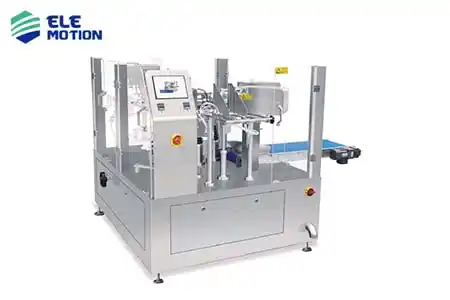


You have a product that needs to go into a flexible pouch—stand‑up, flat, zippered, or spouted. The pouches are already manufactured, printed, and ready to use. Now the question is: how does the machine actually take that empty bag and turn it into a finished, sealed package—automatically, consistently, and at speed?
Unlike form‑fill‑seal systems that create bags from a roll of film, a premade pouch packing machine works with finished pouches. Its job is simpler in concept—pick, open, fill, seal—but the precision required at each step determines whether your line runs at 80 bags per minute with zero leaks or suffers from jams, spills, and rejected packages.
This guide walks through the complete working process of a premade pouch packing machine, explains what happens at each station, and translates every mechanical action into a tangible business outcome. No sales pitch—just a clear, practical understanding of how the technology delivers consistent results.
(https://youtu.be/K-buZnkMiB4?si=aYmLD1GFGV1mP9jZ)
A premade pouch packing machine is an automated system that takes finished, empty pouches and performs four primary operations: feeding, opening, filling, and sealing. The pouches arrive pre‑formed and pre‑printed—the machine does not create them. Instead, it handles them from a magazine or feeder, dispenses the product, and closes the pouch.
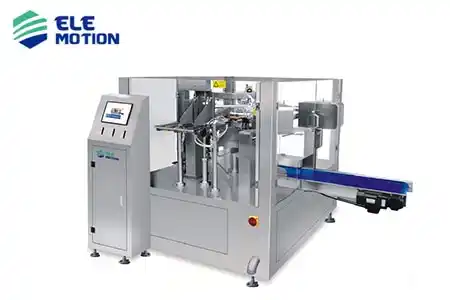
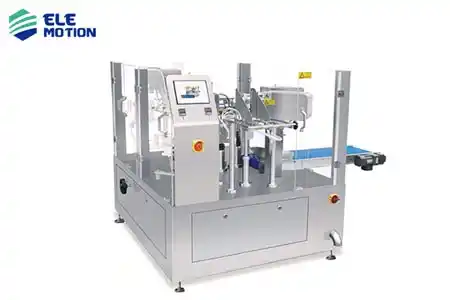
The machine runs on a continuous or indexing cycle, typically using a rotary turret or a linear conveyor to move each pouch through a sequence of stations. At any given moment, multiple pouches are being processed simultaneously—one being picked, another being opened, a third being filled, and a fourth being sealed.
Why this matters to you:Because the machine does not need to form the bag, it can handle a much wider variety of bag styles—stand‑up pouches, flat pouches, zipper bags, spouted pouches—without complex tooling changes. The trade‑off is that you carry inventory of pre‑made pouches, but the machine itself is mechanically simpler and faster to change over than a form‑fill‑seal system.
Every premade pouch packing machine follows the same fundamental workflow. Here is what happens at each stage—and what it means for your production.
The process begins at the bag magazine—a storage area where stacks of empty, pre‑made pouches are loaded, either manually or by an automatic infeed system. From this magazine, a pick‑and‑place system—typically using vacuum suction cups or mechanical grippers—retrieves a single pouch and transfers it to a set of grippers or clamps that will carry it through the rest of the machine.
What this means for you:
The magazine capacity determines how frequently an operator needs to reload pouches—larger magazines (up to 500 pouches) mean less downtime.
Reliable picking prevents double‑feeding (two pouches at once) or missed feeds, which would otherwise cause jams and production stoppages.
Once the pouch is clamped in position, the machine moves it to the opening station. Here, vacuum suction cups or mechanical arms grip the top edges of the pouch and pull them apart, fully opening the mouth. Some machines include a pouch‑open detection system that verifies the pouch is fully opened before filling begins—if the pouch is not open, the machine will skip filling to avoid wasting product and materials.
What this means for you:
Reliable opening is critical. If a pouch is only partially opened, product can spill onto the seal area, leading to weak seals and rejected packages.
Open‑detection systems reduce waste by preventing fills into unopened or misaligned pouches.
Before or after opening—depending on the machine configuration—the pouch passes through a coding station. An inkjet printer or laser coder applies variable data such as manufacturing dates, expiry dates, batch numbers, or barcodes directly onto the pouch.
What this means for you:
Automated coding ensures every package is traceable and compliant with regulatory requirements—without manual labeling.
Integrating coding into the machine eliminates a separate offline printing step, saving labor and reducing the risk of mismatched codes.
With the pouch open and positioned under the filling head, the machine dispenses the product. The filling method depends entirely on your product type:
| Product Type | Typical Filling System | What It Means for You |
|---|---|---|
| Liquids & sauces | Piston fillers or pump fillers | Precise volumetric control prevents overfill and waste |
| Powders | Auger fillers | Screw‑based metering handles fine materials with minimal dust |
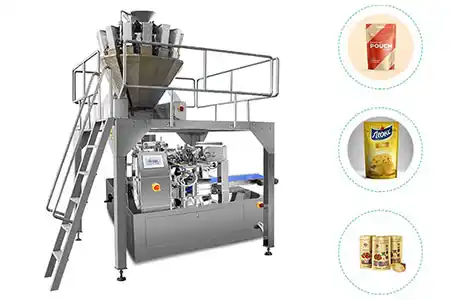
| Granules & solids | Multi‑head weighers or volumetric cups | High‑speed weighing delivers consistent portion sizes |
| Viscous pastes | Servo‑driven piston fillers | Handles thick materials without dripping or stringing |
What this means for you:
The right filler for your product ensures fill accuracy within ±0.5‑1%, reducing product giveaway and protecting your margins.
A clean fill—without product on the seal area—is essential for reliable sealing.
After filling, the pouch moves to the sealing station. Heat‑sealing jaws apply controlled temperature and pressure to the top edge of the pouch, creating a secure, leak‑proof seal. Some machines use ultrasonic sealing for materials that are sensitive to high heat. A compression unit may also remove excess air before sealing to reduce package volume and extend product shelf life.
Once sealed, the finished pouch is discharged onto an exit conveyor for downstream operations—case packing, cartoning, or palletizing.
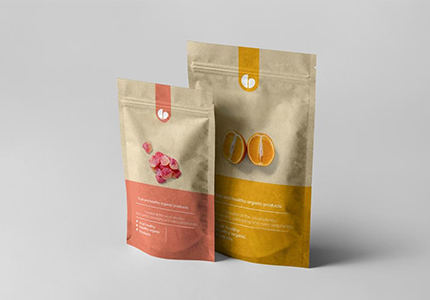
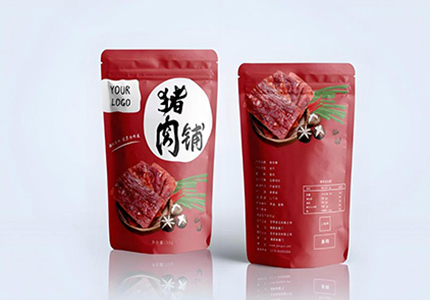
What this means for you:
Consistent seal temperature and pressure mean seal strength is repeatable—every pouch meets the same quality standard.
Air removal extends shelf life for oxygen‑sensitive products like coffee, snacks, and dried foods.
For a detailed look at filling configurations designed for specific product types—including powders, liquids, and granules—review how different filling systems are matched to material characteristics.
Premade pouch packing machines come in two primary configurations. Understanding the difference helps you choose the right platform for your production environment.
| Feature | Rotary (Turret) Machine | Linear (Inline) Machine |
|---|---|---|
| Movement | Pouches rotate on a circular turret through stations | Pouches move in a straight line through stations |
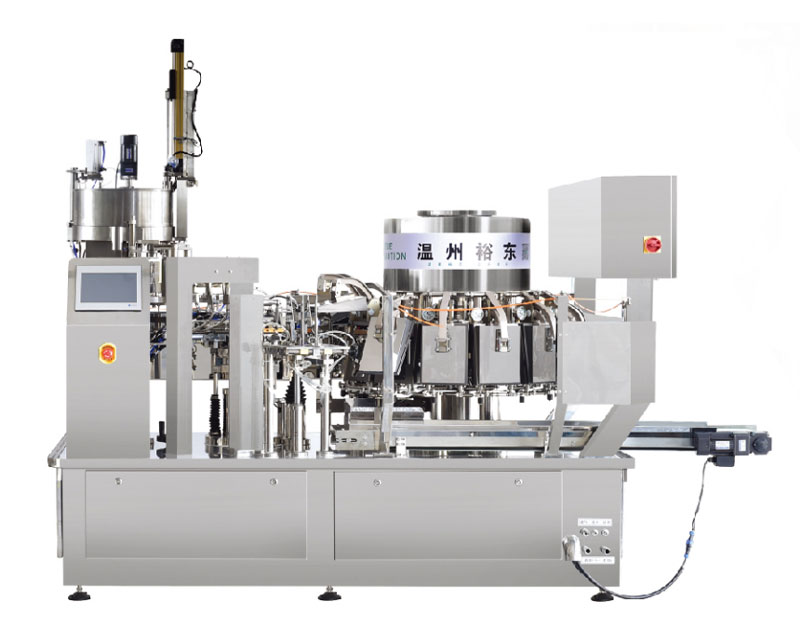
| Speed | Higher—up to 200 pouches per minute | Moderate—typically 30‑80 pouches per minute |
| Footprint | Compact circular design | Longer linear layout |
| Station count | 8‑12 stations on a single turret | Fewer stations in a straight sequence |
| Best for | High‑volume, continuous production | Smaller runs, space‑constrained sites, or simpler operations |
What this means for you:
Rotary machines are the workhorses of high‑volume food and beverage lines. Their continuous motion means multiple pouches are processed simultaneously, delivering consistent output with minimal dwell time between stations.
Linear machines offer simpler operation and maintenance, making them a practical choice for smaller manufacturers or facilities with limited floor space.
To see how different machine configurations apply to specific product categories—from liquids and sauces to nuts and frozen foods—explore packaging solutions organized by material type.
The premade pouch packaging equipment market reflects growing demand for flexible, high‑presentation packaging formats. According to market research, the global premade pouch filling and sealing machine market was valued at US 1,046 million in 2024 and is projected to reach US 1,419 million by 2031, growing at a compound annual rate of 4.5%. A broader market segment—automatic food premade pouch packaging machines—was valued at The market is projected to reach $1.99 billion in 2025 and could hit $3.26 billion by 2032, reflecting a 7.26% CAGR.
What this means for your decision:The market is expanding steadily, driven by automation trends and the increasing popularity of stand‑up pouches and other retail‑ready formats. Investing in premade pouch technology positions your operation to align with where the broader packaging industry is heading.
Premade pouch packaging machines are widely used across multiple industries because of their flexibility and ability to handle diverse product types.
| Industry | Typical Products | Why Premade Pouch Works |
|---|---|---|
| Food | Nuts, snacks, coffee, sauces, frozen foods, ready meals | Supports stand‑up pouches, zipper closures, and retail‑ready presentation |
| Beverage | Juices, smoothies, liquid concentrates | Spouted pouches enable easy dispensing |
| Pharmaceutical | Powders, granules, supplements | Precision filling and hygienic operation meet regulatory standards |
| Personal Care | Lotions, creams, liquid soaps | Flexible pouch formats enhance shelf appeal |
| Household & Industrial | Detergents, hardware parts, pet food | Durable seals and high‑speed output support bulk packaging |
For a comparative analysis of premade pouch versus form‑fill‑seal technologies—including speed, cost, and changeover considerations—a future guide titled “Premade Pouch vs. VFFS: Which Packaging System Fits Your Production Line?” is recommended.
Understanding how a premade pouch packing machine works is the first step. The next is matching the right configuration—rotary or linear, specific filling system, sealing technology—to your product volume, packaging format, and facility constraints.
Once you have clarified these key decision factors—production speed requirements, product characteristics, and bag style needs—comparing the specific specifications of available options becomes the next logical step. You can examine filling and sealing platforms designed for diverse product types, review vacuum packaging solutions for oxygen‑sensitive goods, or explore continuous vertical systems for free‑flowing dry materials.
How to Calculate Packaging Line ROI for Small to Mid‑Sized Manufacturers
Flexible Packaging Material Compatibility: Film Selection Guide
Powder Packaging Best Practices: Preventing Seal Contamination
Automated Changeover Strategies for High‑SKU Production Environments
This article is part of Wenzhou ELEMOTION Automation Technology Co., Ltd.’s technical content library. No direct sales or pricing information is included. All technical discussions aim to help you make informed purchasing decisions.

GET A QUOTE