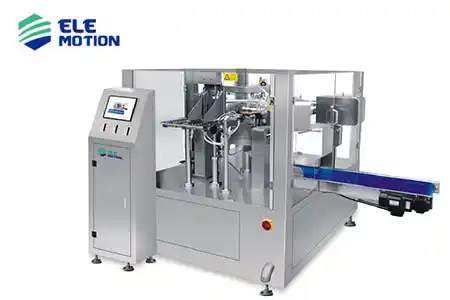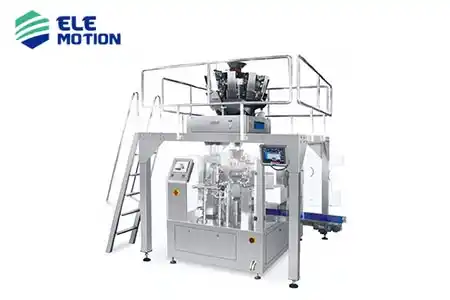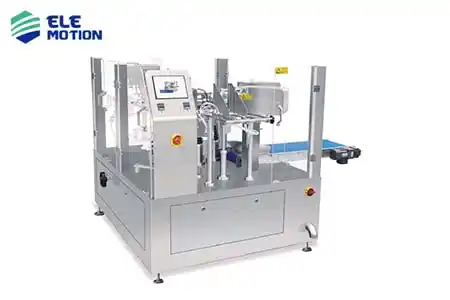


Is your packaging line quietly draining your profits? For many food, beverage, and consumer goods manufacturers, the answer is yes—and the culprit is manual pouch filling.
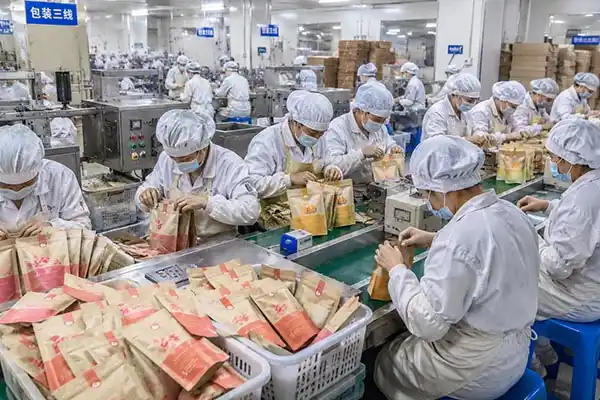
Walk into any mid-sized production facility still relying on hand-packaging, and you will find the same picture: five to eight workers lined up at packing stations, hands moving at full speed, yet barely keeping up with demand. The math is sobering. A single employee dedicating eight hours each day to packing amounts to over two thousand hours of labor annually—just to stuff pouches by hand.
Manufacturers who have made the switch to automated packaging report labor cost reductions of 25 to 40 percent compared to manual operations. But the savings go far beyond wage cuts. Integrated systems can replace five to eight manual stations with just one automated line, delivering savings that extend beyond direct payroll into reduced training costs, lower utility consumption, and significantly minimized product giveaway.
So why haven't more companies automated already? The hesitation often stems from uncertainty—about ROI timelines, about technology complexity, and about choosing the right equipment. This guide breaks down exactly what to expect, how to calculate your savings, and how to make the transition without disruption.
Before exploring automated solutions, let’s quantify what manual packaging truly costs. Many businesses make the mistake of comparing only the machine’s purchase price against current labor spend, overlooking hidden costs that compound year after year.
A TCO analysis is essential here. Total Cost of Ownership includes not just the initial equipment cost, but also operating expenses (energy, consumables, training), maintenance and spare parts, and downtime losses from breakdowns or changeovers. A machine with a higher upfront cost but lower energy consumption, fewer breakdowns, and faster changeovers will almost always deliver superior long-term value. Yet as many as half of buyers evaluate equipment based on initial price alone, ignoring the maintenance and repair expenses that drive TCO up over the machine‘s life cycle.
Here is what a typical manual operation looks like on paper, using a production scenario of packaging 40,000 pouches per day:
| Cost Component | Manual Line (8 workers) | Automated Line (1-2 workers) |
|---|---|---|
| Annual labor cost | 280,000–280,000–320,000 | 50,000–50,000–80,000 |
| Product giveaway | 3–5% of material value | <0.5% of material value |
| Rejected pouches | 2–4% | <0.5% |
| Overtime/shift premiums | Frequent | Rare to none |
When these numbers are run across multiple production shifts, the gap widens dramatically. In industries like snack foods, seasonings, coffee, and pet treats where pouch packaging dominates, companies adopting fully automatic systems report achieving ROI paybacks within 12 to 18 months, with labor savings forming the largest share of the calculation.
Beyond direct savings, automation enables capacity that was previously impossible. Where a manual operator might manage 10 to 15 pouches per minute before fatigue sets in, automated systems can consistently run at 40 to 60 pouches per minute or more, depending on configuration. That throughput delta is not incremental—it is transformative. A facility that struggled to fulfill large orders suddenly has slack capacity to take on new clients, launch seasonal promotions, or bring production of private-label packaging in-house.
If labor reduction were the only benefit, the ROI case would already be compelling. But automation delivers what industry analysts increasingly call a “multiplier effect”—cost advantages that compound across multiple areas of operation.
Precision filling slashes product giveaway. For high-value products like coffee, spices, protein powders, or supplements, overfilling by just half a gram per pouch translates into thousands of dollars in lost product annually. Modern automated systems achieve filling accuracies within ±0.5 percent or better, virtually eliminating costly giveaway while ensuring regulatory compliance on minimum fill weights.
Consistent sealing reduces returns and protects brand reputation. Inconsistent seals from manual or semi-manual operations lead to leaks during shipping, spoilage in warehouses, and customer complaints. Each returned pouch carries not only the cost of the product itself, but also reverse logistics, customer service time, and potential brand damage. Integrated vision inspection systems on automated lines reject underfilled or poorly sealed pouches before they exit the machine, stopping defects at the source.
Minimal material waste aligns with sustainability goals. Advanced pouch packaging systems use optimized roll-feeding techniques that reduce film waste by 25 percent or more compared to manual methods. This matters not only for cost control but also for meeting increasingly strict environmental regulations and consumer expectations around sustainable packaging.
Operational flexibility that manual lines cannot match. Modern fully automatic systems come equipped with recipe storage and quick-change tooling, allowing a single machine to switch between different pouch sizes, product types, and packaging materials in minutes rather than hours. This modularity supports smaller batch runs, faster response to market trends, and the ability to run a diverse product portfolio on the same line without dedicated staff for each format.
If you have been postponing the decision to automate, consider the broader trends shaping 2026.
The manufacturing sector is facing a perfect storm of rising costs. Minimum wage increases across multiple states, wage compression as employers maintain pay equity amid rising floors, and escalating benefit expenses—particularly health insurance—are placing sustained upward pressure on labor costs. Meanwhile, the unemployment rate remains below 5 percent, meaning qualified workers are not getting easier to find. The National Association of Manufacturers projects a shortfall of 1.9 million manufacturing workers in the United States by 2033, driven by an aging, retiring workforce and persistent difficulty filling open positions.
At the same time, the global pre-made pouch packaging machines market is expanding rapidly, valued at approximately USD 1.54 billion in 2025 and projected to reach USD 2.08 billion by 2032 at a compound annual growth rate of 4.38 percent. Major trade events like Interpack 2026 have revealed that packaging equipment suppliers are shifting their focus beyond pure speed toward operational simplicity, hygienic design, and the ability to adapt to rapidly changing packaging formats and regulatory pressures.
These market forces send a clear signal: automation is no longer a competitive differentiator—it is becoming the baseline for survival in high-volume pouch packaging.
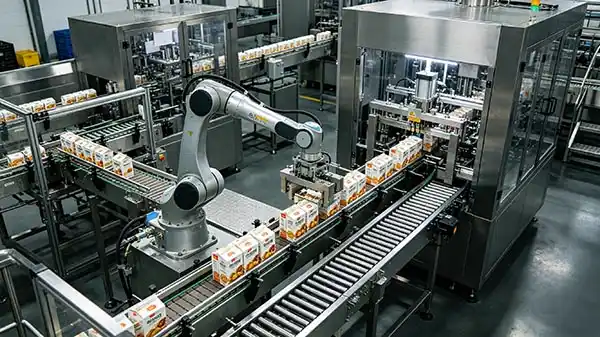
The 2026 packaging paradigm emphasizes that “rather than requiring deep technical expertise, systems must utilize digital platforms that offer guided instructions to simplify tasks and automatic processes”. This means even facilities without specialized engineering staff can operate and maintain advanced automated equipment successfully—removing one of the most common objections to automation adoption.
Making the move to fully automatic pouch packing does not require a full-scale plant overhaul. Here is a phased, low-risk approach that manufacturers across food, beverage, pet treat, and chemical sectors have successfully followed.
Document everything. Current headcount across shifts. Average output per hour. Rejection rates from mis-seals and under/overfills. Overtime frequency and costs. Material waste percentages. This baseline becomes your “before” picture for ROI calculation and helps you quantify exactly how much automation will save.
Before evaluating equipment, define your operational parameters. What is your target output per minute? What pouch sizes and materials will you run? Do you require special features like nitrogen flushing for oxygen-sensitive products, zipper applicators for resealable pouches, or integrated printing for batch coding? Having clear specifications prevents overbuying or underbuying.
| Evaluation Factor | What to Look For |
|---|---|
| Energy efficiency | Servo-driven vs traditional mechanical systems |
| Changeover speed | Tool-less adjustments, recipe storage, quick-release components |
| Spare parts availability | Locally stocked common wear parts, documented replacement intervals |
| Downtime history | Mean time between failures data from the manufacturer |
| Training and support | On-site training included, remote diagnostics capability |
Work with your equipment provider to map out how the new automated line will integrate with upstream processes and downstream operations. The best automated pouch filling system underperforms if upstream bottlenecks or downstream jams cancel out its speed gains.
For manufacturers ready to move beyond the manual packaging bottleneck and capture the full benefits of automation, selecting the right partner is essential.
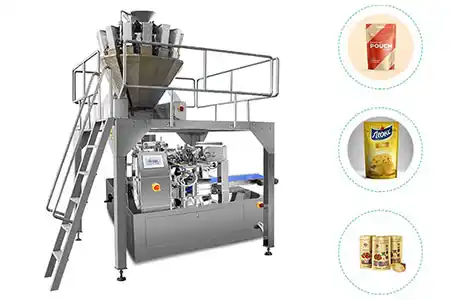
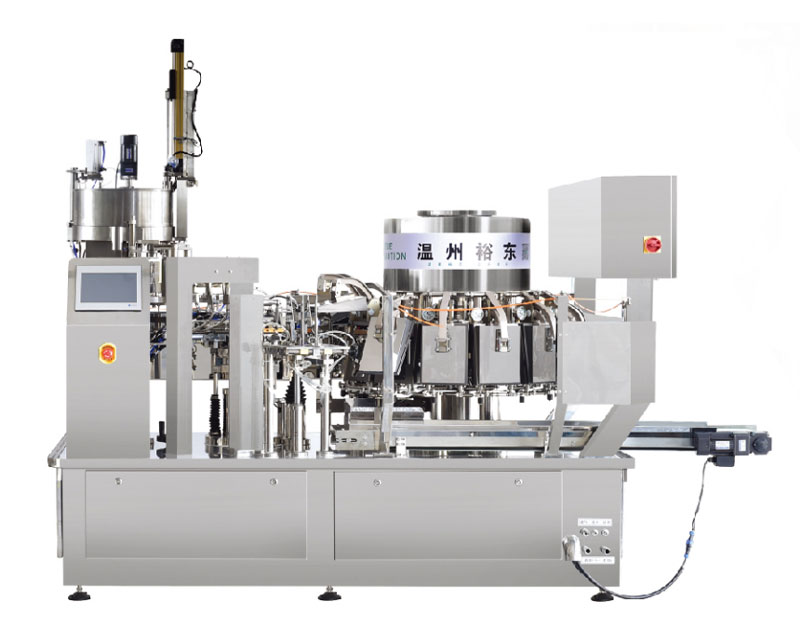
Continue to explore fully automatic pouch packing solutions designed for your specific production requirements. The key is matching equipment capabilities to your unique product characteristics and volume targets—whether you are packaging dry foods, powders, granules, snacks, pet treats, or non-food items. A well-specified automated system pays for itself not only through direct labor reduction but through the compound effect of improved quality, lower waste, and the ability to scale production without proportionally scaling headcount.
Automated pouch packing reduces labor costs by 25 to 40 percent compared to manual or semi-manual lines. Most manufacturers recoup their investment within 12 to 24 months.
Precision filling technology eliminates costly product giveaway while ensuring consistent fill weights, typically within ±0.5 percent accuracy.
Material waste reduction of 25 percent or more comes from optimized roll-feeding and rejection systems that stop defects at the source.
The 2026 labor market is tightening with projected manufacturing worker shortfalls of 1.9 million by 2033, making automation a strategic necessity rather than a luxury.
Modular, user-friendly designs mean facilities of any size can adopt automation without specialized engineering staff.
The question is no longer whether to automate your pouch packing line, but when—and how quickly you want to start saving.
Acepack Enterprise. (2025). Maximizing ROI: The Operational Power of a Matcha Zipper Pouch Packaging Machine.
Litian Packing. (2025). Automated vs Manual Packaging Cost | ROI Analysis 2025.
360iResearch. (2026). *Pre-made Pouch Packaging Machines Market Global Forecast 2026-2032*.
Packaging Technology Today. (2026). *The 2026 Packaging Paradigm: Resilience in a High-Regulation, Low-Labor Era*.
PKN Packaging News. (2026). Machinery Makers Focus on Smarter Automation.
Disclaimer: The cost figures and ROI timelines presented in this article are based on industry benchmarks and case studies. Actual results may vary depending on specific operational conditions, product types, production volumes, and regional labor costs.

GET A QUOTE