

You have just finished a production run. The pouches look good on the outside—print is sharp, fill levels are consistent. Then the quality check comes back: leak rates are above tolerance. Or worse, customers start returning product because seals failed on the shelf.
Pouch sealing leaks are one of the most frustrating—and costly—problems in flexible packaging. The good news is that the vast majority of seal failures trace back to a single root cause: temperature. Whether the temperature is too low, too high, or inconsistent across the sealing jaw, the fix is almost always a matter of understanding and controlling heat.
This guide walks through how sealing temperature affects package integrity, how to diagnose temperature-related failures, and what steps to take to achieve consistent, leak-proof seals. No product pitches—just a practical framework for solving one of packaging’s most persistent problems.
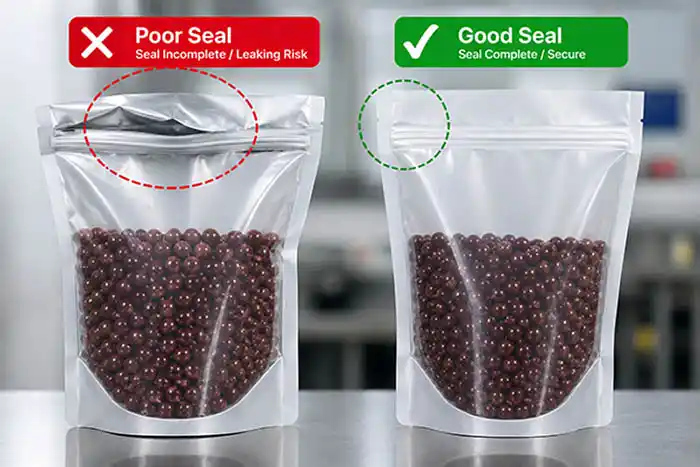
Every heat seal is the result of three interacting variables: temperature, pressure, and dwell time. Temperature is the most critical—and the most commonly misdiagnosed.
When temperature is too low: The inner sealing layer does not melt completely, resulting in weak bonding and poor adhesion. The seal may appear partial or fail under pressure. This is the most common cause of pouch leaks—one experienced diagnostician estimates that 85% of weak seals are caused by the sealing jaw running 10–15°C colder than the film actually requires.
When temperature is too high: Excessive heat can weaken the sealing material, causing the film to burn, melt unevenly, or deform. This creates weak points in the seal that can lead to leaks just as surely as insufficient heat.
When temperature is inconsistent: Even if the average temperature is correct, variation across the jaw face—a spread of more than ±3°C between different points—will produce seals that are strong in some areas and weak in others. An infrared thermometer reading directly at multiple jaw-face points tells the real story.
Why this matters to you:Temperature is not a “set it and forget it” parameter. Film characteristics change between batches, ambient conditions fluctuate, and thermocouples drift. A seal that worked yesterday may fail today—and the fix starts with measuring actual jaw temperature, not trusting the controller readout.
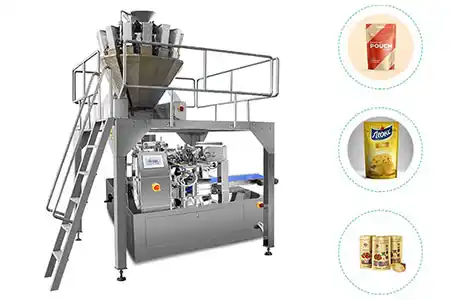
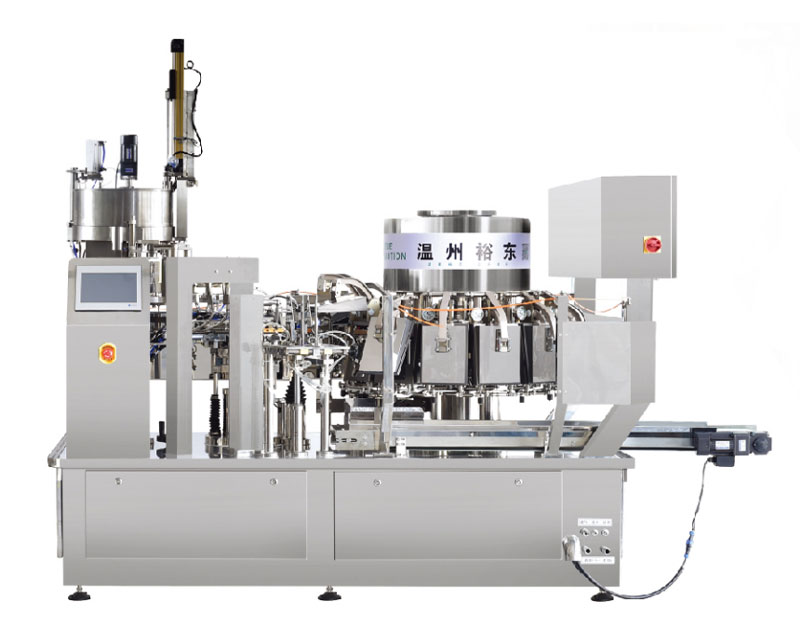
To understand how modern pouch packaging platforms are designed with precise temperature regulation and independently adjustable sealing timers, review how sealing systems are configured for different material types.
| Symptom | Most Likely Temperature Cause | What to Check |
|---|---|---|
| Seal peels apart easily | Temperature too low | Raise heat 5–10°C, add 0.5 sec dwell time |
| Film burns, wrinkles, or deforms | Temperature too high | Lower heat, shorten dwell time |
| Seal is strong on one side, weak on the other | Temperature uneven across jaw | Measure jaw face temperature at multiple points |
| Seal looks complete but fails under pressure | Temperature too low or dwell too short | Verify actual jaw temperature; increase dwell time slightly |
| Seal sticks to the sealing bar | Temperature too high | Reduce temperature; check Teflon tape condition |
| Intermittent sealing—some pouches seal, others don't | Temperature fluctuation or jaw contamination | Check heating elements; clean sealing jaws |
When pouches are leaking, most operators reach for the temperature controller first. That is often a mistake. Here is a proven sequence that saves hours of wasted effort:
Before adjusting any temperature setting, verify that the sealing jaws are mechanically sound. A worn bearing, misaligned jaw carriage, or uneven spring tension can cause the jaws to close at an angle—creating weak spots that no temperature adjustment can fix. Use carbon paper impressions across the sealing jaw face to check pressure distribution in 30 seconds. If the seal bead is thick on one side and paper-thin on the other, you have a mechanical problem.
Do not trust the controller readout. A 15°C discrepancy between the thermocouple location and the jaw surface is common because thermal resistance builds up across the gap. Use an infrared pyrometer to measure temperature at multiple points across the jaw face. If you see a spread of more than ±3°C, you have a temperature uniformity problem.
Different films require different sealing temperatures. Here are typical ranges:
| Film Type | Typical Sealing Temperature Range |
|---|---|
| LDPE | 110–115°C |
| CPP | 110–150°C |
| PET/AL/PE laminates | 160–200°C |
| Paper-based functional materials | Up to 220°C before discoloration |
Critical note:These are starting points, not absolutes. The optimal temperature depends on film thickness, sealant layer composition, and machine characteristics. Always test with your actual pouch material.
When adjusting temperature, make small changes—typically 5–10°C at a time. Test seals after each adjustment. Rushing to large changes often overshoots the optimal window and creates new problems.
Once you have a consistent seal, verify strength using a tensile puller or simple hand-peel test. For high-barrier or vacuum applications, consider ASTM F1929 protocols for leak detection.
Consistent temperature control is not a one-time setup—it requires ongoing attention. Here are the practices that separate reliable lines from problem lines:
Calibrate regularly: Verify filling accuracy and sealing temperature as part of routine maintenance. A calibrated machine is a reliable machine.
Clean sealing jaws: Contamination on the jaws—product residue, dust, or degraded Teflon tape—can create hot spots or prevent full contact. Clean jaws daily with a soft cloth.
Monitor ambient conditions: In high-humidity environments, film absorbs moisture that flashes to steam during sealing, creating micro-channels that become leak paths. If humidity is a factor in your facility, consider environmental controls or adjust temperature/dwell time accordingly.
Track performance data: Modern machines equipped with sensors and monitoring devices can promptly detect issues such as insufficient sealing temperature and take corrective actions. Machines with full servo drive systems deliver stable temperature control and significantly reduce unplanned downtime.
For application-specific sealing considerations—including how different product types affect seal requirements—explore packaging solutions organized by material type.
A snack manufacturing facility once spent three shifts replacing sealing jaws, swapping thermocouples, and adjusting pressure on a vertical bagging machine. The seal failure persisted. The actual problem? A worn linear bearing in the jaw carriage. The jaws were tilting about 0.8 mm on every close cycle.
The lesson: Temperature is the most common cause of seal failure—but not the only cause. Always follow the diagnostic sequence: alignment first, thermal second, film third. This order eliminates mechanical issues before you waste time chasing temperature ghosts.
Understanding how temperature control affects seal quality is the first step toward eliminating leaks. The next is ensuring your equipment has the precision and stability to maintain consistent temperature across every cycle—shift after shift, batch after batch.
Once you have clarified your material requirements and production environment, comparing the specific capabilities of available systems becomes the logical next step. You can examine filling and sealing platforms designed for diverse product types, review vacuum packaging solutions for oxygen‑sensitive goods, or explore continuous vertical systems for free‑flowing dry materials.
For a comprehensive comparison of pouch packaging machine types—including their respective sealing system designs and temperature control capabilities—a future guide titled “Premade Pouch vs. VFFS: Which Packaging System Fits Your Production Line?” is recommended.
How a Premade Pouch Packing Machine Works —— Complete Process Guide
Premade Pouch vs. VFFS Packaging: Pros, Cons & How to Choose
Pouch Packaging Tech 2026: 5 Automation Trends Shaping Production
Flexible Packaging Material Compatibility: Film Selection Guide
How to Calculate Packaging Line ROI for Small to Mid-Sized Manufacturers
This article is part of Wenzhou ELEMOTION Automation Technology Co., Ltd.'s technical content library. No direct sales or pricing information is included. All technical discussions aim to help you make informed purchasing decisions.

GET A QUOTE