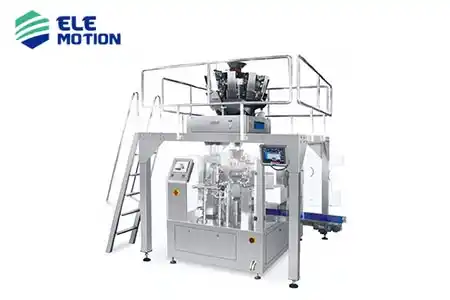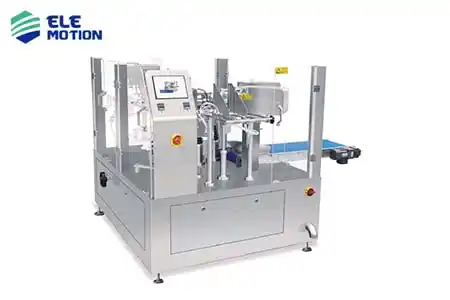


If you are responsible for a flexible packaging line—whether for food, pharmaceuticals, or daily chemical products—you have likely noticed that the conversation has shifted. Speed alone no longer defines a competitive operation. The questions now are about adaptability: How quickly can you change formats? How reliably can you maintain quality with a leaner workforce? How do you meet sustainability regulations without sacrificing throughput?
The packaging machinery sector is entering a new phase—one where smarter engineering is applied less as a futuristic talking point and more as a practical response to real production pain points. This guide examines five key automation trends shaping pouch packaging technology in 2026, drawn from industry reports, trade show innovations, and market data. Consider this your decision-making framework for evaluating what matters most in the year ahead.
Artificial intelligence was everywhere at Interpack 2026—but notably, the discussion has matured. Rather than grand claims about “smart factories,” machinery suppliers are increasingly focused on targeted applications that improve operational performance.
According to PMMI’s February 2026 report, Building an AI Advantage in Packaging Equipment, the range of AI applications in packaging equipment has expanded significantly, with solutions becoming increasingly affordable and sophisticated. What we are seeing now is a shift from isolated pilots toward broader adoption, where AI supports smarter, more connected production environments.
Where AI is delivering tangible value in pouch packaging:
| AI Application | What It Does | What It Means for You |
|---|---|---|
| Machine vision | Inspects seals, detects defects, and verifies fill levels in real time | Reduces rejected packages and catches quality issues before they reach customers |
| Predictive maintenance | Analyzes vibration, temperature, and performance data to forecast failures | Prevents unplanned downtime—one of the largest hidden costs in production |
| Knowledge transfer | Captures operator expertise and delivers guided instructions via digital interfaces | Mitigates the impact of workforce turnover and reduces training time |
| Regulatory compliance | Monitors and documents production parameters for audit trails | Simplifies traceability and reduces the administrative burden of compliance |
The practical takeaway:AI in 2026 is no longer about hype. It is about reducing downtime, improving quality consistency, and making your operation less dependent on a handful of highly skilled technicians. According to PMMI, the most common AI applications today are knowledge transfer, machine vision, predictive maintenance, regulation and compliance, and data transparency.
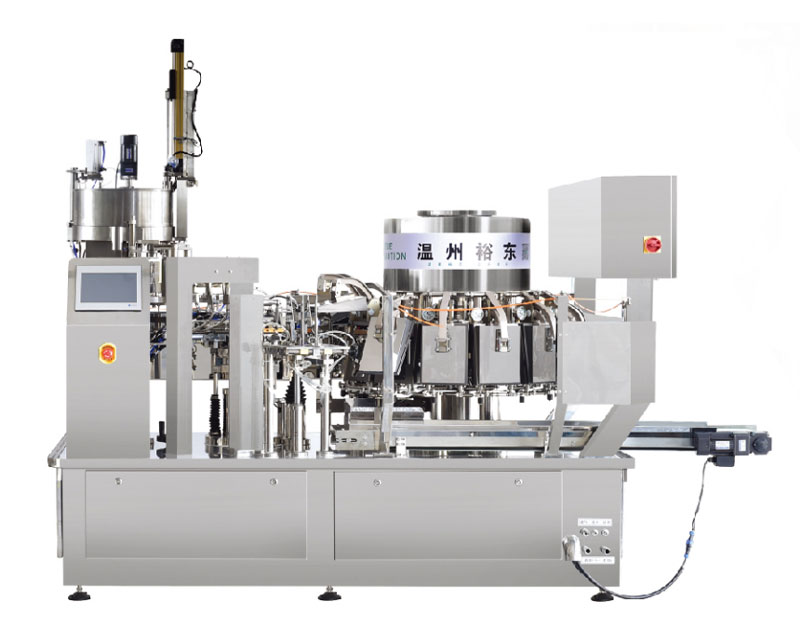
To understand how modern packaging platforms are being designed to integrate these intelligent capabilities, review how automated systems are evolving to support smarter production workflows.
The numbers are sobering. According to the National Association of Manufacturers, the U.S. faces a shortfall of 1.9 million manufacturing workers by 2033. With an aging, retiring workforce and persistent difficulty filling open positions, companies are forced to find solutions that meet their business needs with fewer—and often less experienced—people.
As the labor shortage persists into 2026, the unskilled operator has become the industry’s new baseline. This means packaging equipment must be designed differently:
Guided operation: Systems must utilize digital platforms that offer step‑by‑step instructions to simplify tasks.
Automated changeovers: Complex format changes must be executable by a revolving workforce without sacrificing quality or efficiency.
Self‑adjusting processes: With AI tools, machines can move closer to autonomous optimization, self‑adjusting in real time based on material fluctuations and maintenance needs.
What this means for pouch packaging: The days of relying on a master operator who has run the same machine for 20 years are ending. In 2026, the machine itself must do more of the thinking—guiding the operator through setup, detecting errors before they become problems, and reducing the technical skill required to achieve consistent output.
Sustainability is no longer a niche concern—it is a primary driver of 2026 packaging decisions. Across regions, consumers and regulators are demanding packaging that is recyclable, lower‑waste, and circular by design. Europe’s Circular Economy Act, for example, aims to increase the supply of high‑quality recycled materials and stimulate demand for these materials within Europe.
For pouch packaging, this translates into two major shifts:
1. The rise of mono‑materials
More brands are exploring the transition to mono‑materials that meet strict recyclability standards. However, not all packaging machines can accommodate mono‑materials, which often have different sealing properties from multi‑layer films. At Interpack 2026, machinery makers highlighted mono‑material readiness as a key design priority.
2. The lightweighting imperative
Flexible packaging formats—including pouches and flow wraps—are gaining attention for their efficiency and reduced material use. Lighter films reduce material costs and carbon footprints, but they also require more precise sealing technologies to maintain package integrity.
The practical takeaway:If you are evaluating new pouch packaging equipment in 2026, material compatibility is no longer an afterthought. The machine you choose must be able to run the films you will need tomorrow—not just the ones you use today.
For a deeper look at how different product categories—from liquids and sauces to nuts and frozen foods—are adapting to these material changes, explore application‑specific packaging considerations.
Product portfolios are proliferating. More SKUs, shorter product lifecycles, and the rise of e‑commerce have created a production environment where flexibility is as valuable as speed.
The response from equipment manufacturers has been a shift toward modular machine architectures. Rather than single‑purpose machines that are optimized for one format and one size, 2026 systems are designed to be reconfigured quickly:
Platform flexibility: Modular HFFS platforms can produce pouches from both premade rolls and other modes of production, allowing for rapid configuration.
Micro‑batch agility: Modularity allows manufacturers to switch between vastly different pouch shapes or sizes in minutes, supporting the proliferation of small batches common in e‑commerce.
Multi‑format capability: Integrated systems can combine weighing, filling, and sealing in coordinated workflows that reduce handling and contamination risk.
The practical takeaway:If your operation handles dozens—or hundreds—of SKUs, changeover time is a direct cost. Machines that reduce changeover from 60 minutes to 15 minutes can recover hours of production time per week. That is capacity you do not need to buy new equipment to unlock.
Downtime is the silent killer of production efficiency. In 2026, the industry’s answer is predictive maintenance—using sensors, data analytics, and IIoT connectivity to identify potential failures before they disrupt operations.
Remote monitoring and IIoT‑enabled diagnostics have become near‑standard for new deployments, shifting maintenance from reactive to predictive paradigms. What does this look like in practice?
Real‑time performance insight: Digitalization and Industry 4.0 integration are improving real‑time monitoring and performance insight.
Condition‑based alerts: Sensors track vibration, temperature, and seal integrity, flagging anomalies before they become breakdowns.
Data‑driven optimization: Plant‑wide systems that dynamically balance throughput, quality, cost, and energy consumption across every production stage are beginning to mature from specialized installations to standard capability.
The practical takeaway:A machine that tells you when it needs service—before it breaks down—is worth more than a machine that runs slightly faster. Predictive maintenance reduces unplanned downtime, extends equipment life, and allows you to schedule maintenance during planned stoppages rather than emergency shutdowns.
The trends above are not abstract—they are reflected in market growth numbers that signal real demand.
| Market Segment | 2025 Value | 2026 Projection | CAGR | Source |
|---|---|---|---|---|
| Automatic Food Premade Pouch Packaging Machines | USD 1.99B | USD 2.12B | 7.26% | 360iResearch |
| Pre‑made Pouch Packaging Machines (all industries) | USD 1.54B | USD 1.61B | 4.38% | Research and Markets |
| Automated Pouch Loader Market | USD 2.17B | USD 2.35B | 8.4% | Research and Markets |
| Pouch Filling Machines (total market) | ~USD 3.3B | ~USD 3.5B | 7.2% | Verified Market Reports |
| Packaging Automation Solutions (total market) | USD 79.3B (2024) | ~USD 84.6B (est.) | 6.7% | Industry Reports |
What this means for your decision:The pouch packaging equipment market is growing steadily—driven by automation, sustainability, and the shift from rigid to flexible packaging. Investing in equipment that aligns with these trends positions your operation for both current efficiency and future adaptability.
Understanding the five trends shaping pouch packaging in 2026 is the first step. The next step is translating these trends into specific equipment requirements for your operation—whether that means prioritizing AI‑enabled quality inspection, modular changeover capability, or mono‑material compatibility.
Once you have clarified which of these trends matter most for your production environment—your SKU complexity, workforce profile, and sustainability roadmap—comparing the specific capabilities of available systems becomes the logical next step. You can examine filling and sealing platforms designed for diverse product types, review vacuum packaging solutions for oxygen‑sensitive goods, or explore continuous vertical systems for free‑flowing dry materials.
Premade Pouch vs. VFFS: Which Packaging System Fits Your Production Line?
How to Calculate Packaging Line ROI for Small to Mid‑Sized Manufacturers
AI in Packaging: A Practical Implementation Guide for Production Managers
Sustainability in Flexible Packaging: Mono‑Materials and Recyclable Solutions
This article is part of Wenzhou ELEMOTION Automation Technology Co., Ltd.’s technical content library. No direct sales or pricing information is included. All technical discussions aim to help you make informed purchasing decisions.

GET A QUOTE