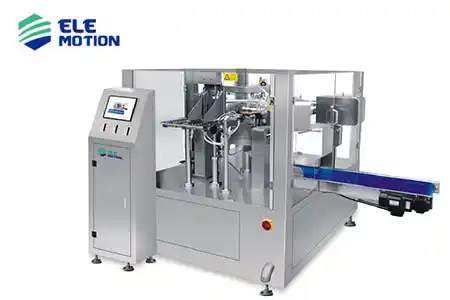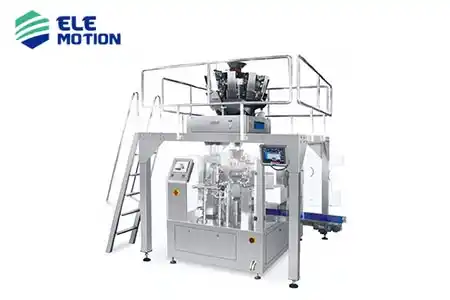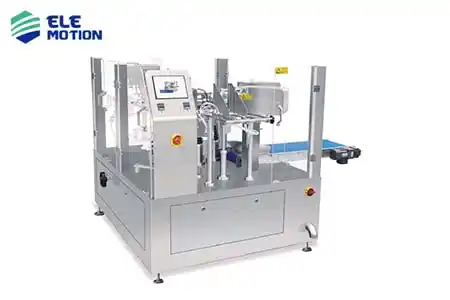


You have already decided that premade pouches are right for your product. The packaging will be printed, finished, and ready to fill. Now comes the next decision: rotary or linear?
Both configurations perform the same core functions—picking, opening, filling, and sealing premade pouches. But the way they move pouches through those steps is fundamentally different, and that difference has real consequences for your production line’s speed, flexibility, floor space, and total cost of ownership.
This guide breaks down how each configuration works, compares their strengths and trade-offs across the metrics that matter most, and provides a practical decision framework to help you match the machine to your operation. No sales pitch—just a clear comparison to inform your equipment specification.
The mechanical distinction between rotary and linear premade pouch packers is simple but consequential.
A linear machine moves pouches in a straight line. Each station—pick, open, fill, seal—operates sequentially. The pouch stops at each station, the operation is performed, and then it moves to the next. Think of it like a city bus: it stops at every corner.
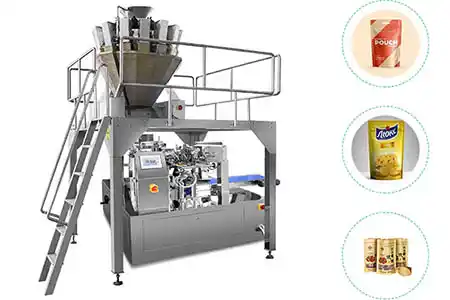
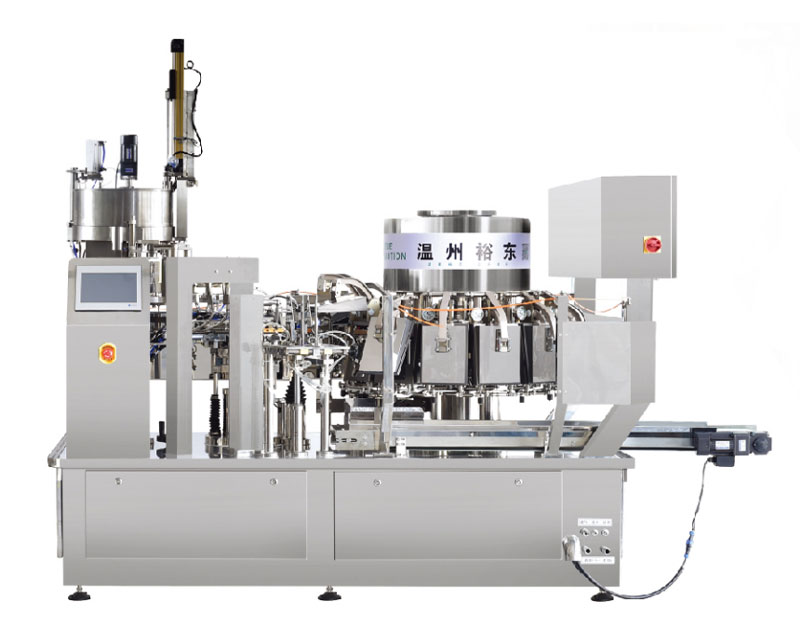
A rotary machine places pouches on a rotating carousel or turret. While the turret turns continuously, pouches move through all stations without stopping. The sealing bar rotates with the pouch, maintaining contact throughout the cycle. This is more like a moving walkway: you step on and keep moving.
The stop‑and‑go motion of linear machines creates inertia challenges at higher speeds—pouches can tip, sealing dwell time becomes inconsistent. Rotary machines eliminate start‑stop shock, enabling smoother handling at higher throughput. But that continuous motion comes with more complex mechanics and typically higher upfront cost.
To understand how different machine configurations handle specific pouch types and filling requirements, review how filling systems are matched to product characteristics.
| Decision Factor | Linear Machine | Rotary Machine |
|---|---|---|
| Typical speed | 20–40 pouches/min | 40–120+ pouches/min |
| Changeover time | 15–30 minutes | 30–60 minutes (traditional); 10 min with servo‑driven presets |
| Footprint | Long (12–15+ feet) | Compact circular design |
| Maintenance complexity | Simpler mechanics | More complex cam tracks and servo systems |
| Upfront cost | Lower—entry‑level option | 40–60% higher than comparable linear models |
(https://youtu.be/Ajp5WgdUnYo?si=V6XwffPWRjWLbrGF)
Speed: For lines running fewer than 40 pouches per minute, a well‑tuned linear machine is often sufficient. Many mid‑range linear systems reliably handle 35–45 cycles per minute with standard‑sized bags. But once you need 60 or more pouches per minute, the linear design hits a physics limit. Rotary systems can sustain 50–130 pouches per minute.
Changeover time: This is where linear machines traditionally win. A typical linear machine can change between pouch sizes in 10–20 minutes—some operators can complete a changeover during a standard 15‑minute break. Rotary designs traditionally required 45 minutes or more. However, modern servo‑driven rotary platforms now store up to 50 recipe presets, bringing changeovers under 10 minutes.
Footprint: Linear machines are, as the name suggests, long—a typical 4‑station linear filler might span 12–15 feet. A rotary system producing 100 pouches per minute might occupy a 6‑foot area—less than half the space.
Maintenance: Linear machines have simpler mechanics but more start‑stop wear on clutches and brakes. Rotary machines have fewer shock loads but more complex cam tracks and servo systems. Linear machines are generally easier to clean because all components are accessible from the sides without removing a turret assembly.
Your production volume is low to medium (20–40 pouches/min)
You run multiple SKUs daily and need frequent changeovers
You have a limited capital budget
You need to handle larger bag sizes or heavier products
Your facility has long floor space but limited width
Your production requires high volume
You run long production shifts with few changeovers
Floor space is at a premium
You need consistent seal quality at high speeds
You are packaging retail‑ready formats like stand‑up and zipper pouches
Many manufacturers actually run both. One nut exporter started with a linear machine for bulk packaging, then added a rotary machine for retail line expansion—because linear makes sense for lower‑volume bulk, but rotary delivers the speed and consistency required for high‑volume retail.
For application‑specific considerations—including how different product types (liquids, powders, granules, nuts) affect machine selection—explore packaging solutions organized by material type.
The premade pouch packaging equipment market is growing steadily, reflecting broader trends in flexible packaging adoption.
| Market Segment | 2025 Value | Projected 2032 Value | CAGR |
|---|---|---|---|
| Pre‑made Pouch Packaging Machines | USD 1.54B | USD 2.08B | 4.38% |
| Automatic Food Premade Pouch Packaging Machines | USD 1.99B | USD 3.26B | 7.26% |
According to industry analysis, rotary pouch packaging equipment adoption is growing at 6.2% annually, driven by ready‑to‑eat meal and supplement packaging demand. The global flexible packaging market is projected to reach $400 billion by 2027, driven largely by convenience packaging demand in food, beverage, and personal care.
The market is moving toward higher‑speed, more automated solutions. If your volume is growing, investing in rotary capability now may position you better for future demand—but only if your SKU mix and changeover frequency justify the premium.
Here is a five‑step process to determine which configuration fits your operation:
Start with your production target. If you need more than 40 pouches per minute consistently, rotary is likely the better choice. If you are comfortably below that threshold, linear may be sufficient.
Count how many different pouch sizes and formats you run in a typical week. If you change over more than once per shift, the faster changeover of a linear machine—or a servo‑equipped rotary with recipe presets—is critical.
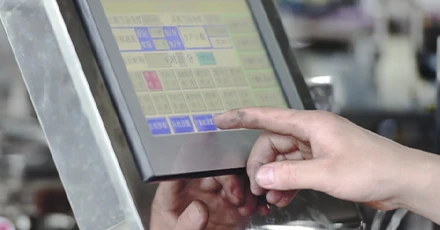
Linear machines require length—typically 12–15 feet or more. Rotary machines are more square and compact. If your facility has limited linear space, rotary may be the only practical option.
Linear machines are mechanically simpler and easier to maintain. Rotary machines require more technical expertise for maintenance and troubleshooting. If you have a less experienced maintenance team, the linear configuration may be more forgiving.
Rotary machines typically cost 40–60% more upfront. But if your volume justifies the speed, the higher throughput can deliver a faster payback through reduced labor cost per package and higher production capacity. Calculate your annual output, then divide the machine cost by the packages produced over its expected life—the per‑package equipment cost often tells a clearer story than the upfront price tag.
Understanding the difference between rotary and linear premade pouch packers is the first step. The next is matching the right configuration—and the right specifications within that configuration—to your production volume, SKU mix, and facility constraints.
Once you have clarified these key decision factors, comparing the specific capabilities of available systems becomes the logical next step. You can examine filling and sealing platforms designed for diverse product types, review vacuum packaging solutions for oxygen‑sensitive goods, or explore continuous vertical systems for free‑flowing dry materials.
How a Premade Pouch Packing Machine Works —— Complete Process Guide
Premade Pouch vs. VFFS Packaging: Pros, Cons & How to Choose
Pouch Sealing Leaks? Fix with Temperature Control
Pouch Packaging Tech 2026: 5 Automation Trends Shaping Production
Flexible Packaging Material Compatibility: Film Selection Guide
This article is part of Wenzhou ELEMOTION Automation Technology Co., Ltd.‘s technical content library. No direct sales or pricing information is included. All technical discussions aim to help you make informed purchasing decisions.

GET A QUOTE