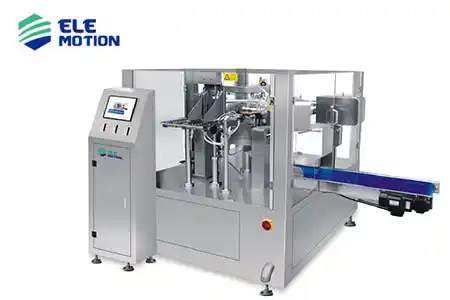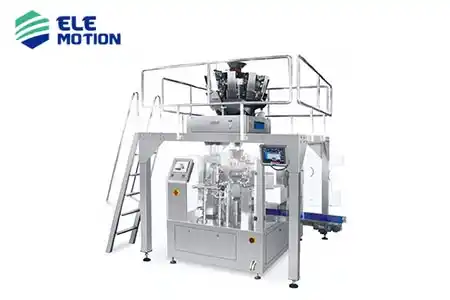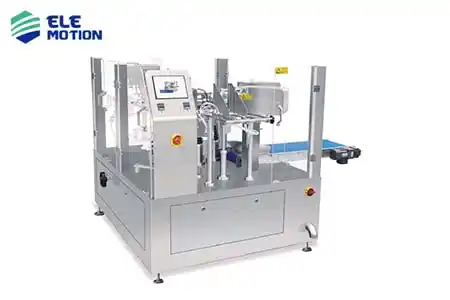


Walk into any packaging facility today, and you’ll see the same headache everywhere: labor shortages, rising material costs, and production targets that keep climbing. When buyers search for a pouch packing machine, they’re not really looking for a machine. They’re looking for a solution that keeps their line running without constant babysitting, handles multiple pouch formats without a two-hour changeover, and pays for itself before the warranty expires. The global pouch packaging machine market hit $50.17 billion in 2025 and is projected to reach $81.71 billion by 2034—but that growth isn’t just about more machines. It’s about smarter automation that adapts to real-world production chaos.
This isn’t just engineering jargon. The difference between rotary and intermittent motion machines will shape your daily output, your downtime, and your operator’s sanity.
Intermittent machines work like a traffic light—go, stop, go, stop. Each cycle has a built-in pause between stations. For small runs, that’s manageable. But when you’re pushing thousands of pouches a day, those micro-pauses add up to hours of lost production. A typical intermittent pouch packing machine tops out at 50–80 pouches per minute, and every stop introduces alignment drift, seal inconsistency, and wear on start-stop components.
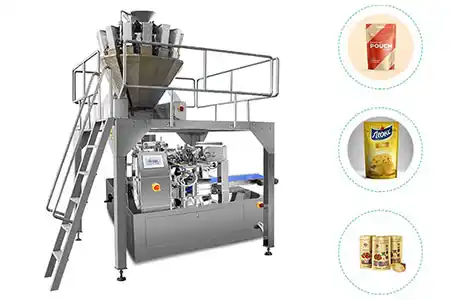
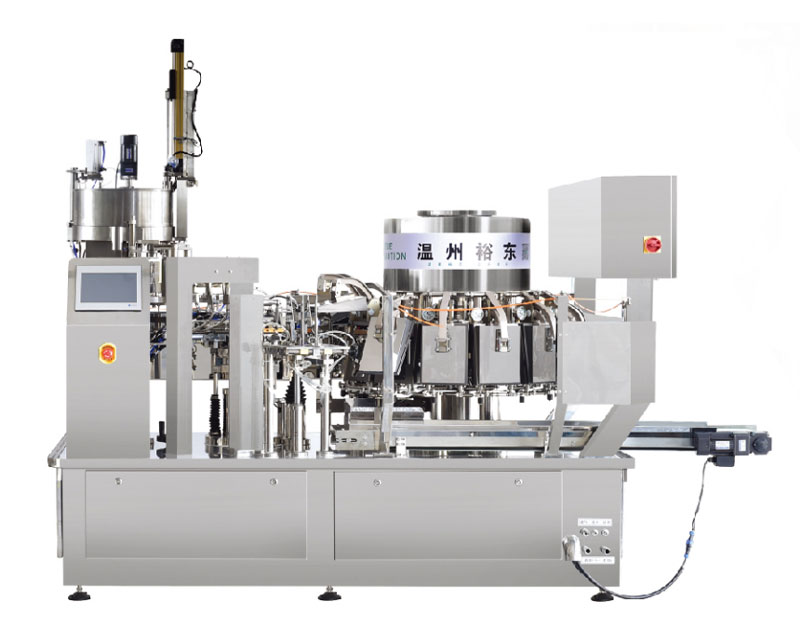
Here’s where things get interesting. Rotary machines operate on continuous rotation—think of a carousel where pouches move seamlessly from feeding to filling to sealing without stopping. Multiple stations work simultaneously: while station A fills, station B seals, and station C loads the next pouch. Rotary premade pouch packing machines typically run 80–250 pouches per minute, with some high-end systems pushing even higher speeds depending on pouch size and material.
But speed isn’t the only win. The rigid rotary turret keeps every pouch locked in precise position throughout the process. That means fewer misaligned seals, less product spillage, and a first-pass yield that regularly exceeds 99%—a number that directly hits your bottom line.
User Insight: A snack brand we worked with switched from an intermittent to a rotary system. Their operator told me: “I used to spend two hours every shift fixing jammed pouches. Now I spend that time actually managing production.” That’s the real-world difference.
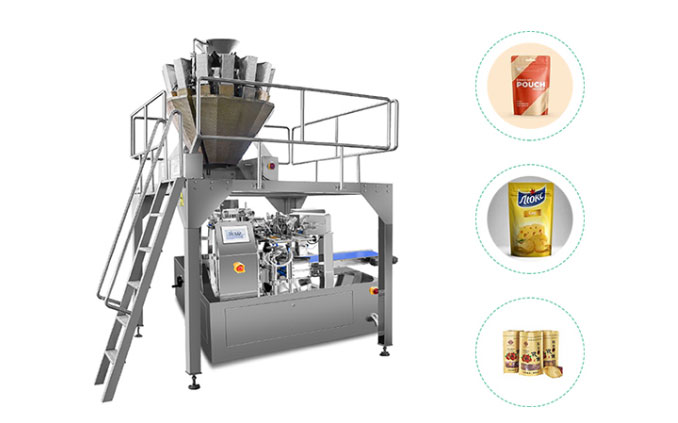
Ever tried to run stand-up pouches, flat pouches, and spouted pouches on the same line? Most machines choke on the changeover. A well-designed pouch packing machine handles virtually every preformed flexible pouch type: stand-up pouches with or without zippers, spout pouches, quad-seal pouches, eight-side seal pouches, and flat pouches.
And here’s the kicker: changeover time. Modern rotary systems with quick-release pouch holders and digital parameter storage let you switch pouch sizes in 10 to 30 minutes—not the two-hour nightmare you’re probably used to. For contract packers running multiple SKUs daily, that flexibility isn’t a luxury. It’s survival.
I’ve seen too many buyers obsess over filling speed while ignoring the seal bar. A weak seal means returns, complaints, and spoiled product. Rotary machines deliver uniform pressure and heat distribution across the entire seal edge, reducing the risk of micro-leaks that shorten shelf life. For pharmaceutical and premium food applications, this precision can mean the difference between a six-month and a twelve-month shelf life.
The best pouch packing machine isn’t an island. It should plug into your existing ecosystem like it was built there. Look for machines that integrate seamlessly with multi-head weighers (for powders and granules), piston fillers (for liquids and pastes), coding systems for batch numbers and expiry dates, checkweighers and metal detectors for quality assurance, and case packers and palletizers for end-of-line automation.
A quick observation from the field: The brands getting the best ROI aren’t necessarily buying the fastest machines. They’re buying machines that talk to their existing equipment without expensive middleware or custom programming.
The numbers don’t lie. The global automatic flexible packaging machines market was valued at $2.8 billion in 2024 and is expected to reach $4.3 billion by 2031, growing at a 6.8% CAGR. What’s driving this? Three forces:
Labor shortages. You know this one intimately. Factories can’t find enough bodies to run manual lines.
Sustainability pressure. Regulators and consumers want recyclable, mono-material pouches. Machines need to handle them without jamming.
Industry 4.0 adoption. Smart sensors, real-time monitoring, and predictive maintenance aren’t buzzwords anymore—they’re competitive necessities.
According to industry analysts at Future Market Insights, “automated pouch systems are becoming the backbone of efficient, scalable, and sustainable packaging operations”. The message is clear: if you’re still running semi-manual lines, you’re losing ground every day.
Why this matters for your purchase: A modern pouch packing machine with IoT connectivity can alert your maintenance team before a bearing fails. It can track OEE (Overall Equipment Effectiveness) in real time. It can store recipes for fifty different pouch sizes. Those features aren’t “nice to have” anymore. They’re table stakes.
Every production line has its quirks. Maybe you’re running high-acid tomato paste that requires food-grade 316L stainless steel contact parts. Maybe you need a zipper applicator for resealable coffee pouches. Maybe your facility has ceiling height constraints that rule out standard vertical form-fill-seal machines.
This is where ELEMOTION stands apart. Instead of forcing you into a one-size-fits-all configuration, ELEMOTION builds pouch packing machine solutions tailored to your product viscosity, pouch material, throughput targets, and facility layout. From compact tabletop units for startups to high-speed duplex rotary systems for industrial-scale operations, the range covers everything from solid and granule packaging with multi-head weighers to fully integrated lines with coding, inspection, and case packing.
A real scenario: A pet food manufacturer needed to run 80g stand-up pouches and 500g flat pouches on the same line, switching every two hours. Off-the-shelf machines couldn’t handle the rapid changeover without constant recalibration. ELEMOTION delivered a dual-rotary system with pre-saved recipes for both formats. Changeover dropped from 45 minutes to 12. That’s 33 minutes reclaimed per shift—about three extra production hours per week.
Personal note: I’ve seen “customizable” thrown around so often it’s lost all meaning. But there’s a difference between adding a checkbox to a brochure and actually engineering a machine around your constraints. The former gives you a parts list. The latter gives you a solution.
Let’s talk money. Not the sticker price—the total cost of ownership.
Industry benchmarks are shifting. The expected payback cycle for packaging automation has compressed from the traditional 2–4 years down to just 18–24 months. For high-volume operations producing 500,000+ packages per month, some VFFS systems achieve ROI in 12–18 months. For premium products with lower volumes but higher margins, premade pouch machines can deliver even faster payback through brand differentiation and reduced changeover downtime.
But here’s what too many buyers miss: ROI calculations shouldn’t stop at labor savings. Factor in:
Material waste reduction. A high-precision pouch packing machine cuts scrap from mis-seals and overfills.
Downtime elimination. Rotary machines run longer between maintenance intervals.
Quality consistency. Fewer customer returns from leaky pouches or underfilled packages.
Production flexibility. The ability to run small batches profitably opens new revenue streams.
Don’t fall for the “cheapest bag” fallacy. Yes, VFFS machines using roll stock have lower per-pouch material costs than premade pouch systems. But premade pouches deliver premium shelf appeal, advanced features (zippers, spouts, degassing valves), and faster changeovers. For brands competing on retail shelves, that packaging quality can command higher per-unit pricing that more than offsets the material cost difference.
The bottom line: Calculate TCO over five years, not five months. Include labor, materials, maintenance, and lost production from downtime. Then compare.
You’re not just buying steel and servos. You’re buying a partnership. Here’s what separates reliable suppliers from the rest.
CE certification and ISO 9001 accreditation. Verifiable documentation, not just claims on a product page. For food-contact applications, look for FDA compliance (21 CFR Part 177) and materials like 304 or 316L stainless steel.
Proven industry experience. A supplier who has successfully deployed machines in your specific sector—food, pharma, cosmetics, pet food—brings domain expertise you can’t buy off a spec sheet.
Transparent post-sale support. Training, spare parts availability, remote diagnostics, and on-site service response times matter more than the machine itself after year one.
Customization capability. Can they modify pouch grippers for your unique bag thickness? Adjust filling nozzles for your product viscosity? If the answer is “we only sell standard models,” keep looking.
No demonstrable case studies. Anyone can claim high speeds. Verified results from actual customers are harder to fake.
Vague answers on compliance. If they can’t produce CE or FDA documentation on request, assume it doesn’t exist.
Outsourced support. When something breaks, do you call the manufacturer or a third-party service center? The former owns the outcome. The latter just bills the hours.
A sobering statistic: According to research from Future Market Insights, the global pre-made pouch packaging machines market is projected to grow from $1.54 billion in 2025 to $2.08 billion by 2032. That growth means more suppliers entering the space. Not all of them will be around in five years to honor warranties or supply spare parts.
After reviewing the landscape—the rotary vs. intermittent debate, the customization imperative, the ROI calculations—one name keeps emerging as the solution that ties it all together.
ELEMOTION manufactures high-speed automatic premade pouch packing machines that combine multi-axis servo control, touchscreen HMI, and robust stainless steel construction. Their double rotary mechanism delivers consistent high output while handling stand-up pouches, flat pouches, zipper bags, and spouted formats with minimal changeover friction.
But the real differentiator is the customization mindset. ELEMOTION doesn’t ship you a catalog and walk away. They analyze your product characteristics—granule size, liquid viscosity, pouch film thickness—and engineer filling systems, sealing parameters, and pouch grippers to match. For startups, compact tabletop models provide entry-level automation without over-investing. For multinational manufacturers, fully integrated lines with multi-head weighers, coding stations, checkweighers, and case packers deliver turnkey production from bag to pallet.
Compared to VFFS machines that require complex film handling and struggle with pre-printed pouches, ELEMOTION‘s premade pouch packing machine eliminates film forming variables entirely. You load pre-made pouches—with your branding already printed—and the system handles the rest. That means zero film tension issues, zero misaligned graphics, and perfect registration every time.
And the certification boxes are checked: CE-marked for European markets, FDA-compliant food-grade contact parts, and ISO-aligned manufacturing processes. When you’re exporting to regulated markets, that paperwork isn’t bureaucracy—it’s the key to the door.
The best pouch packing machine for your facility isn’t the one with the highest speed rating. It’s the one that fits your pouches, your products, your shift schedule, and your budget. That fit can’t be determined from a datasheet—it requires conversation, calculation, and sometimes a test run.
ELEMOTION offers a free product precision analysis for qualified buyers. Their team will evaluate your current packaging metrics, identify bottlenecks, and model the ROI of upgrading to an automated pouch packing machine solution. You’ll get a customized recommendation, not a generic sales pitch.
Visit the ELEMOTION Bagging Machine Product Page →
Browse product models, read verified case studies, and request your free precision analysis today. Your packaging line’s next efficiency breakthrough starts here.

GET A QUOTE