

When planning or upgrading a packaging line, one of the most critical decisions a production manager or packaging engineer faces is choosing between a pouch packaging machine vs vertical form fill seal machine. Both technologies are widely used across the food, pet food, chemical, and personal care industries, but they operate on fundamentally different principles. Getting this choice wrong can lead to costly downtime, poor seal quality, or limited bag style flexibility that hurts your brand’s shelf appeal.
In this detailed technical comparison, we will break down five key dimensions: working principle, changeover time, bag style variety, sealing integrity, and product suitability. By the end, you will have a clear roadmap to decide whether a premade pouch machine or a VFFS system is the right fit for your production environment. We will also touch on real-world factors like premade pouch vs rollstock cost efficiency, changeover time comparison data, and VFFS machine comparison insights that go beyond basic spec sheets.
Understanding the fundamental mechanical workflow of each system is the first step in making an informed comparison. While both machines ultimately create filled and sealed bags, their methods are completely different.
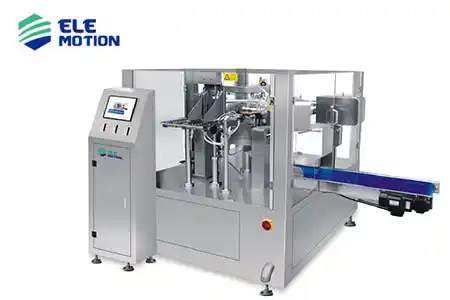
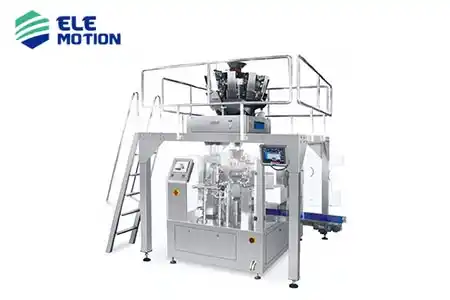
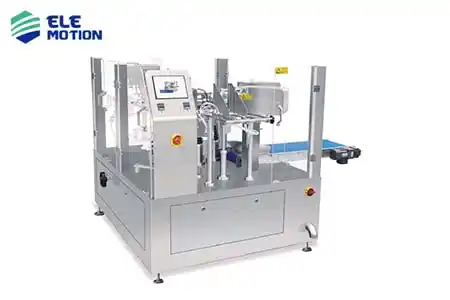
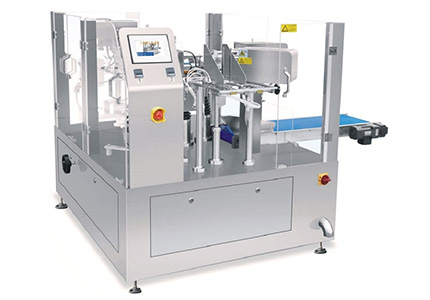
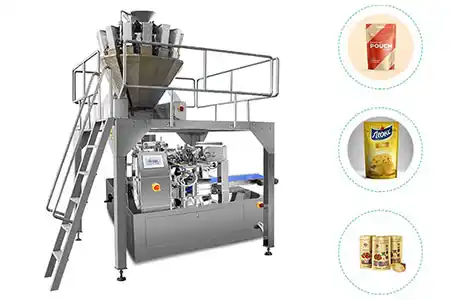
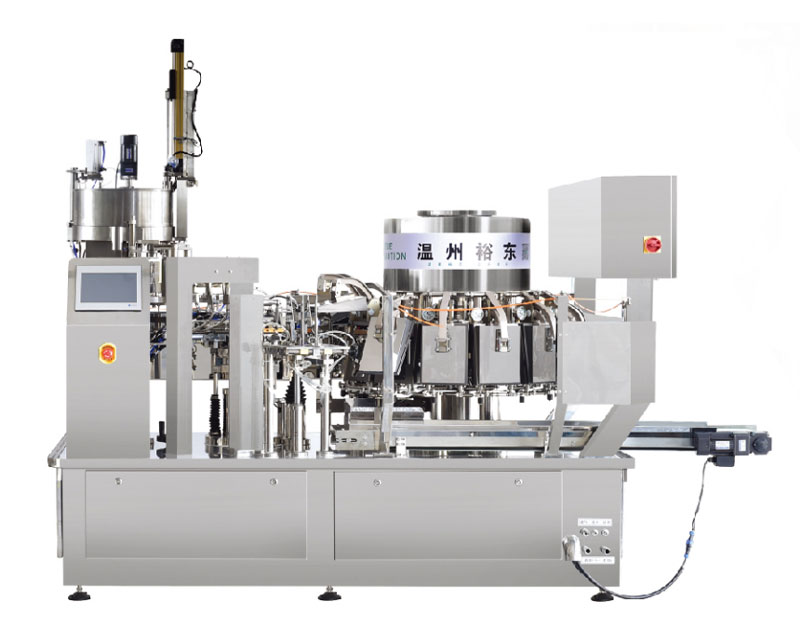
A premade pouch machine starts with already-formed bags. These pouches are typically made off-line by a separate converting process and delivered to the machine as a stack or magazine. The machine then executes a sequential cycle:
Pick & Place: Vacuum suckers pick a single pouch from the magazine and transfer it to a set of grippers.
Open: Secondary vacuum cups or mechanical openers pull the front and back layers apart, creating a fully open mouth.
Fill: A filling nozzle or spout enters the open pouch and deposits the product (liquid, powder, paste, or granules).
Seal: The grippers close the top of the pouch, and heated seal bars apply pressure to create a hermetic seal.
Discharge: The finished bag is released onto an outfeed conveyor.
Key components to examine when evaluating a pouch packaging machine vs vertical form fill seal machine from a premade perspective include the bag magazine, vacuum suction cups, opening air jets or mechanical plows, filling nozzles, and heat-sealing jaws. Because the bag is already formed, the machine focuses on precise handling rather than film forming.
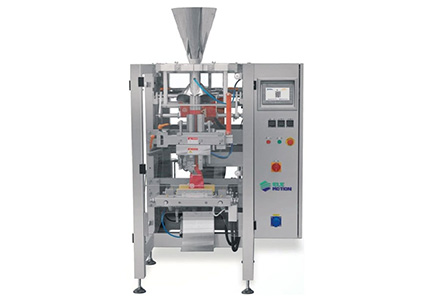
A Vertical Form Fill Seal (VFFS) machine starts with a flat roll of flexible film (rollstock). It creates the bag on the fly in a continuous motion:
Forming: Flat film is pulled over a forming shoulder and down a vertical tube, creating a continuous tube.
Vertical Sealing (Longitudinal): A set of heated seal bars or wheels fuses the overlapping edges of the film into a fin or lap seal.
Filling: Product is dropped through the center tube into the newly formed tube of film.
Horizontal Sealing & Cutting: Below the filling area, a pair of cross-seal jaws seal the top of the filled bag and the bottom of the next bag simultaneously, then cut the finished bag free.
Critical components on a VFFS machine include the forming collar or shoulder, pull belts or rollers, vertical seal system, cross-seal jaws with integrated cut-off knives, and film tracking sensors. The entire process is continuous, making it very fast for high-volume runs but less adaptable to complex bag geometries.
One of the most frequently debated topics in any pouch packaging machine vs vertical form fill seal machine discussion is changeover time. Production managers know that even a 15-minute difference per changeover can add up to hours of lost output per week.
Because a premade pouch machine handles already-formed bags, changing from one bag size or style to another is mostly a matter of mechanical adjustments to the grippers, opening system, and filling nozzle depth. For example, switching from a standard stand-up pouch to a flat-bottom bag or a spouted pouch requires:
Adjusting gripper width and height
Changing the opening suction cups (if different thickness)
Modifying the filling nozzle position (10–20 minutes for an experienced operator)
Typical documented changeover time comparison data shows that modern premade pouch machines achieve changeovers in 10–20 minutes. Some advanced servo-driven models even store recipes for 50+ bag formats, reducing changeover to under 10 minutes. This makes them ideal for co-packers or brands running multiple SKUs on the same line.
Switching bag dimensions on a VFFS machine is more invasive. To change bag width or length, you often need to:
Replace the forming shoulder (a shaped metal collar that folds the film)
Adjust or swap vertical seal bars
Re-tension pull belts
Recalibrate the film tracking system
Adjust cross-seal jaw timing and cut-off position
This typically takes 30–60 minutes for a well-trained crew, and up to 90 minutes for complex changes that involve different film materials. Moreover, VFFS machines are fundamentally limited in bag style options. They can produce pillow bags, block-bottom bags (with additional folding equipment), and simple gusseted bags, but they cannot make true stand-up pouches with independent bottom gussets, spouted pouches, or zipper reclosable bags without expensive add-on modules that further complicate changeover.
When conducting a VFFS machine comparison against premade systems, always multiply your daily changeover frequency by the time difference. For a line with 6 changeovers per shift, a premade machine can save 2–4 hours of labor and downtime daily.
Retail success often depends on how your package looks on the shelf. This is where the pouch packaging machine vs vertical form fill seal machine debate tilts heavily toward premade systems.
A premade pouch machine can handle virtually any pouch style available from a bag converter. Common options include:
Stand-up pouch (Doypack): With a folded bottom that allows the bag to stand upright. Excellent for premium snacks, coffee, and pet treats.
Flat bottom pouch (quad seal): A box-like bag with four sealed sides and a flat bottom, offering maximum shelf presence.
Spouted pouch (fitment pouch): Includes a rigid spout and cap, ideal for liquids like baby food, smoothies, or laundry detergent.
Zipper pouch (reclosable): A press-to-close or slider zipper integrated into the top seal.
Three-side seal or four-side seal pouches.
Because the bag is pre-made, the packaging machine does not need to form these complex features. This translates into bag style flexibility that no standard VFFS can match.
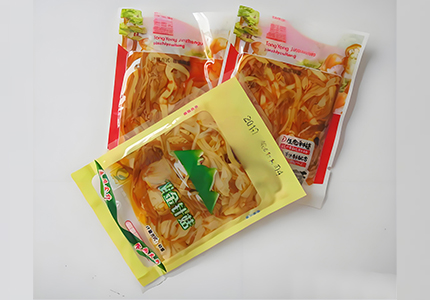
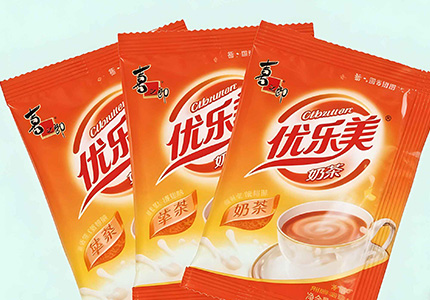
A standard VFFS machine produces pillow bags – a simple rectangle with seals at the top, bottom, and one vertical back seam. With additional accessories like gusseters or block-bottom folding devices, a VFFS can make side-gusseted bags or flat-bottom bags, but these come with trade-offs:
Gusseted bags from VFFS often have inconsistent gusset depth.
Block-bottom bags require complex folding boards and slower machine speeds.
No VFFS can produce a true stand-up pouch with an independent bottom gusset because the forming process cannot create a folded bottom from a single web without pre-creasing, and even then results are mediocre.
If your product roadmap includes any of the premium bag styles mentioned above, a premade pouch machine is the only viable choice. For commodities like simple sugar packets, hardware parts, or frozen vegetables in pillow bags, a VFFS may be sufficient.
Seal integrity directly impacts product freshness, leak prevention, and customer returns. The difference in sealing between a pouch packaging machine vs vertical form fill seal machine stems from how the bag is held during sealing.
With a premade pouch, the bag’s top opening is already cut and aligned. The machine’s grippers hold the pouch in a fixed position while the seal jaws close. There is no film tension pulling the bag away, no web wandering side-to-side, and no distortion from product falling through a tube. As a result, seal consistency is very high.
Additionally, premade pouches can be made from multi-layer laminates that include aluminum foil, EVOH barrier layers, or even paper, without worrying about how those materials form around a shoulder. This makes them compatible with nearly any flexible packaging material.
On a VFFS machine, the film is constantly under tension from pull belts, forming shoulders, and the weight of the product column. If the film tension varies – due to roll hardness, static electricity, or temperature changes – the film can track left or right, causing:
Misaligned vertical seals (leaks along the back seam)
Uneven cross-seals (weak spots or burned areas)
Creasing or wrinkling in the seal area
Seal integrity on a VFFS is also highly dependent on the film’s slip properties and gauge uniformity. Thinner films or recycled-content films can cause more problems. While modern VFFS machines have tension sensors and web guides, they cannot eliminate all variation. In practice, many packaging engineers accept a slightly higher leak rate on VFFS in exchange for lower material cost when running simple products.
For critical applications like medical fluids, premium sauces, or oxygen-sensitive coffee, the seal integrity advantage of a premade pouch machine is often decisive.
Product characteristics – flowability, viscosity, particle size, and temperature – play a major role in the pouch packaging machine vs vertical form fill seal machine decision.
Because a premade pouch has its mouth fully opened before filling, the filling nozzle can be inserted directly into the bag. This allows:
Liquids and thin sauces: Fill nozzles with drip-free cut-offs to prevent splashing.
High-viscosity pastes (peanut butter, mayonnaise, ketchup): Piston fillers or auger pumps can extrude product deep into the bag without smearing the seal area.
Chunky products (salsa, soup with vegetables): Large-diameter nozzles can pass chunks up to 20mm without clogging.
Products with fines or dust: The nozzle can be lowered to the bottom of the bag and rise as filling progresses, minimizing dust generation.
In addition, premade pouch machines handle premade pouch vs rollstock considerations well because the bag is already sealed on three sides, so liquid cannot leak out during filling.
A VFFS machine relies on gravity to drop product through a central tube into the partially formed bag. This works excellently for:
Nuts, seeds, dried fruits
Candy and chocolates
Coffee beans and ground coffee (with deaeration)
Pet kibble
Granules like sugar, salt, rice, or plastic pellets
If your product is free-flowing solids and you rarely package liquids, a VFFS machine is a cost-effective workhorse. If you package any liquids, sauces, or sticky pastes regularly, choose a premade pouch machine.
Below is a quick-reference comparison to highlight the main trade-offs in the pouch packaging machine vs vertical form fill seal machine decision.
| Feature | Premade Pouch Machine | VFFS Machine |
|---|---|---|
| Changeover Time | 10–20 minutes | 30–60 minutes |
| Bag Style Variety | High (zipper, spout, flat bottom) | Low (pillow, gusseted) |
| Seal Consistency | High (fixed bag opening) | Medium (depends on film) |
| Best for Product Type | Liquids, pastes, sauces | Free-flowing solids |
Still unsure which direction to take? Answer these five questions honestly, and the choice between a pouch packaging machine vs vertical form fill seal machine will become clear.
Does your product require a zipper, spout, or stand-up bottom for retail differentiation?
Yes → Premade pouch machine.
No → VFFS could work.
How often do you change bag sizes or styles per shift?
3+ changeovers per shift → Premade pouch (saves 1–2 hours daily).
1 changeover per day or less → VFFS acceptable.
Is your product a liquid, paste, or powder with poor flowability?
Yes → Premade pouch.
No (free-flowing solid) → VFFS.
Do you need premium shelf appeal for retail (e.g., a flat-bottom bag that stands out on a crowded shelf)?
Yes → Premade pouch.
No (commodity packaging) → VFFS.
Is your batch size small (e.g., <5000 bags per SKU), requiring frequent changeovers?
Yes → Premade pouch (quick changeover and minimal film waste during setup).
No (runs >50,000 bags per SKU) → VFFS’s lower material cost becomes attractive.
Q1: Can a VFFS machine make stand-up pouches?
Not truly. Some VFFS machines with a “block-bottom” attachment can produce a bag that vaguely stands, but it lacks the dedicated bottom gusset fold of a true stand-up pouch. For genuine stand-up pouches with a stable base and premium look, a premade pouch machine is required.
Q2: Which machine is easier to operate for a new production line?
A premade pouch machine generally has a shorter learning curve for operators because the bag is already formed – you just pick, open, fill, and seal. VFFS requires understanding film forming, tension control, and seal jaw timing. However, both require training.
Q3: Does a premade pouch machine handle powder products well?
Yes, when equipped with a dust-reduction filling system (e.g., auger filler with a dust skirt or vacuum nozzle). The open mouth allows the filler to deposit powder deep into the bag, minimizing dust on the seal area. This is often cleaner than VFFS for fine powders like protein powder or flour.
Q4: Which technology has lower maintenance costs?
VFFS machines have fewer moving parts (no bag magazine, fewer grippers) and lower initial cost, but they wear out forming shoulders and seal jaws faster due to continuous film friction. Premade pouch machines have more complex pick-and-place mechanisms, but many parts are modular and easy to replace. On a 5-year total cost of ownership, they often come close.
Q5: What about the premade pouch vs rollstock material cost difference?
Rollstock (VFFS film) is 15–30% cheaper per thousand bags compared to premade pouches, but this ignores changeover labor, seal failure waste, and lost production time. For short runs or complex bag styles, the total cost per good bag often favors premade pouch machines.
There is no universal “better” choice in the pouch packaging machine vs vertical form fill seal machine debate. The right answer depends entirely on your product mix, bag style requirements, changeover frequency, and budget. If you need premium bag styles (stand-up, flat bottom, spout, zipper), handle liquids or pastes, or run frequent small batches, a premade pouch machine is your solution. If you run high-volume, long-run, free-flowing solids in simple pillow bags and want the lowest material cost, a VFFS machine will serve you well.
Ready to make the right choice? Contact our engineering team with your product details, target bag style, and desired output per hour. We will send you a customized comparison report including estimated changeover times, seal integrity test results for your specific product, and a total cost of ownership analysis for both technologies. Visit our homepage.

GET A QUOTE