

If you are scanning the market for a plastic thermoforming machine, your most pressing question probably is not just about the price tag—it is about which system will deliver consistent part quality without bleeding your budget dry on energy bills and downtime. The global thermoforming machines market was valued at approximately US$ 1.12 billion in 2024 and is projected to reach US$ 1.54 billion by 2031, reflecting a steady 4.5% compound annual growth rate. That growth is fueled by surging demand across packaging, automotive, and medical sectors. But here is the catch: a machine that works wonders for a yogurt cup line may turn into a nightmare for heavy-duty industrial panels. So, how do you actually navigate this landscape? Let us cut through the noise.
Before you even look at brochures, you need to understand the core split in this industry: thin-gauge thermoforming versus heavy-gauge thermoforming. They are not interchangeable, and pretending otherwise leads to costly mismatches.
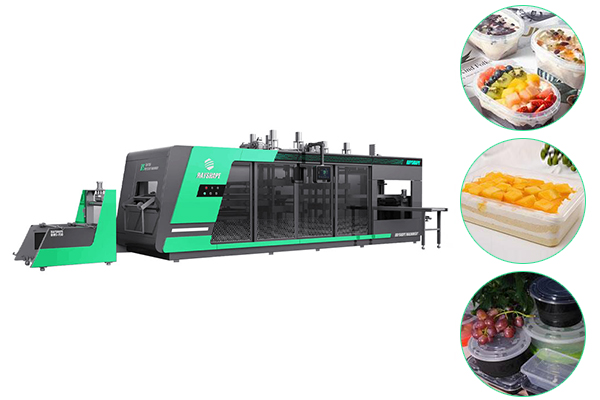
Thin-gauge thermoforming uses plastic sheets less than 1.5 mm thick (0.060 inches), typically fed from rolls. These systems are the workhorses of the packaging world. If you need disposable cups, lids, blister packs, or clamshell containers at breakneck speeds, thin-gauge is your lane. These machines feature roll-fed automatic systems, integrated in-line trimming, and cycle times that can push beyond 40 cycles per minute. The trade-off? While they excel at high-volume output, they offer less flexibility for deep-drawn or structurally complex parts.
Flip the script: heavy-gauge thermoforming (sometimes called thick-sheet forming) handles materials thicker than 1.5 mm, often fed as individual sheets. Think automotive interior panels, equipment housings, refrigerator liners, and heavy-duty trays. Here, production speed takes a back seat to part strength and surface finish. Cycle times are longer, trimming often requires CNC routing post-production, and the machine footprint tends to be larger. But if your application demands rigidity and cosmetic quality—like medical device enclosures or aerospace covers—heavy-gauge is non-negotiable.
A quick reality check: I have seen manufacturers try to force heavy-gauge parts through thin-gauge machines. The result? Incomplete draws, stress cracks, and a pile of rejected parts. Match the machine type to your product's thickness range from day one.
Here is a number that keeps plant managers up at night: heating systems alone account for 30% to 50% of total energy consumption in a typical plastic thermoforming machine. That is not a rounding error—that is a massive operational expense that most buyers overlook until the first utility bill arrives.
Modern advancements are changing this equation, though. Servo-electric drive systems now reduce energy consumption by up to 35% compared to traditional hydraulic alternatives. Some cutting-edge designs even feature energy-recuperative heating tunnels that capture 65% of waste thermal energy for facility heating applications. Meanwhile, intelligent temperature control systems using PID algorithms—and increasingly AI-enhanced predictive logic—can cut heating energy usage by another 8% to 12% while improving product consistency.
From a purely financial standpoint, an energy-inefficient machine will silently erode your margins year after year. The upfront savings on a cheaper, less efficient unit rarely justify the long-term bleed. Always ask suppliers for documented energy consumption data at specific production speeds.
Even the most sophisticated plastic thermoforming machine will throw curveballs. Based on field data and maintenance logs, three problem areas account for the majority of unplanned downtime.
Uneven heating tops the list of frustrations. Damaged heating elements, miscalibrated temperature sensors, or improper settings for specific plastics (PET requires different profiles than PP, for example) lead to inconsistent wall thickness—thin spots prone to breakage and thick spots wasting material. The fix? Regular calibration checks and opting for machines with zone-specific heating controls that allow granular adjustments across the heating platen.
Incomplete forming usually traces back to insufficient pressure or a dirty/damaged mold surface. And when plastic sticks to the mold? That is often a release agent issue or a temperature mismatch. Machines equipped with quick-change mold systems and automated release mechanisms significantly reduce these headaches.
Dull blades or misaligned cutting mechanisms produce ragged edges and damaged products. In-line die cutters with servo-driven precision have become the gold standard here, eliminating post-production trimming bottlenecks.
The bottom line: a machine's reliability is only as good as the after-sales support behind it. When evaluating suppliers, probe their maintenance response times and parts availability. A machine that sits idle for two weeks waiting for a heater element is not a bargain at any price.
It would be reckless to recommend a plastic thermoforming machine without acknowledging the alternatives. Injection molding, 3D printing, and CNC machining all have their seats at the table.
Injection molding delivers unmatched precision for complex, high-detail parts, and it becomes highly cost-effective at extremely large volumes. However, the tooling costs can be astronomical—often five to ten times higher than thermoforming molds. Thermoforming shines for small to medium production runs, particularly for thin-walled, large components. If your part geometry is relatively shallow and your volumes fall in the tens of thousands rather than millions, thermoforming usually wins on total landed cost.
3D printing offers incredible design freedom and is ideal for prototyping or short-run custom parts. But for any production run beyond a few hundred units, additive manufacturing becomes painfully slow and expensive per part. Thermoforming crushes it on speed and material efficiency at scale.
One area where thermoforming has a clear edge: sustainability integration. Advanced machines can now consistently form sheets containing 30% post-consumer recycled content without wrinkling. And closed-loop regrind systems automatically reintroduce up to 98% of in-process scrap back into production. That is not just green marketing—that is real material cost savings.
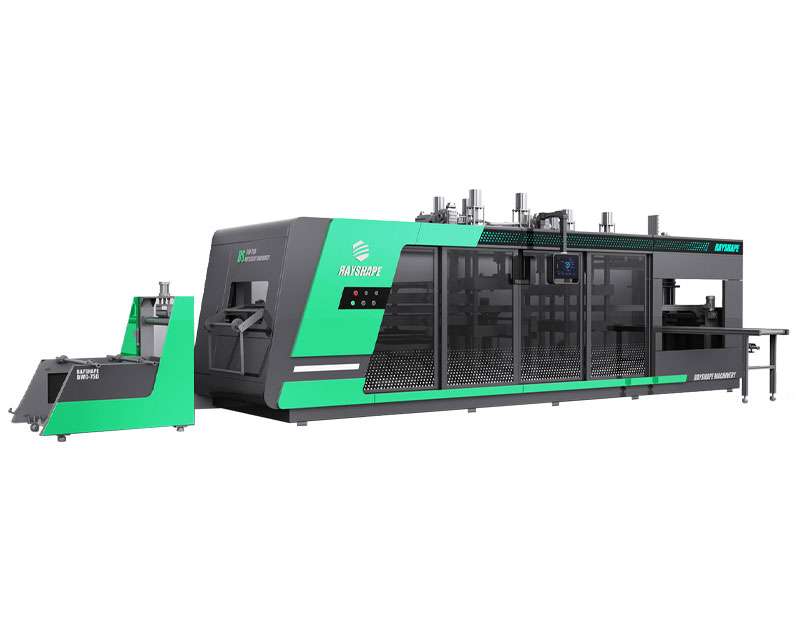
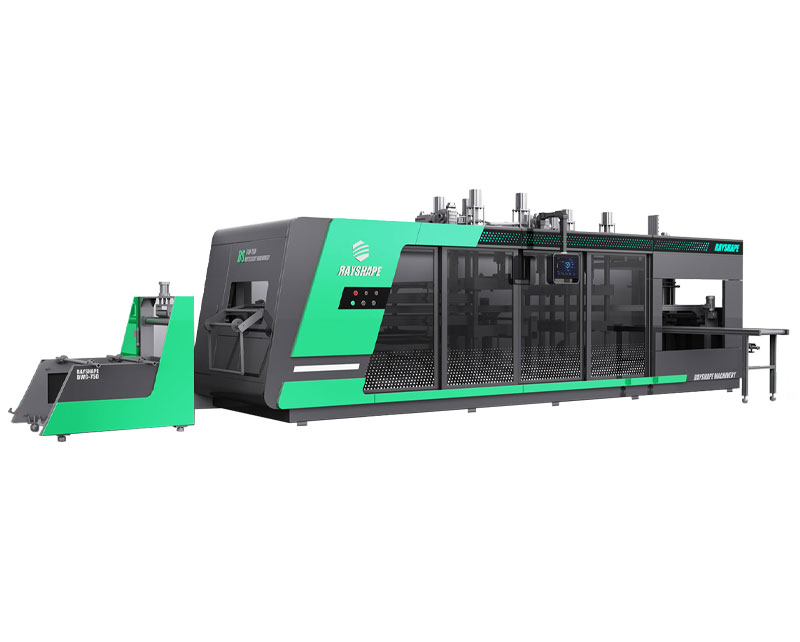
When it comes to bridging the gap between raw capability and real-world production efficiency, ELEMOTION has engineered a compelling answer. Their plastic thermoforming machine integrates mechanical, pneumatic, and electrical systems into a single automated platform, handling everything from sheet loading and heating to forming, punching, cutting, stacking, and edge-material winding in one continuous flow.
What sets ELEMOTION apart is not just automation—it is intelligent energy management. Their real-time distributed digital dynamic thermoforming temperature control system achieves single-point precision of ±1°C while slashing energy consumption by over 15% compared to conventional models. Combine that with full-servo motor drives replacing traditional hydraulic and pneumatic systems, and overall energy savings reach 30%. That is not incremental improvement; that is a fundamental rethinking of how power is used in thermoforming.
The practical impact on your production line is measurable. A machine that runs cooler, wastes less heat, and achieves burr-free clean processing pushes yield rates above 99%. Fewer rejected parts mean lower material costs and less environmental overhead.
Generic machines produce generic results. The manufacturers who thrive are those who tailor equipment to their specific product mix. ELEMOTION understands this deeply, offering professional packaging customization services backed by a dedicated 30-person after-sales support team.
Their four-station plastic thermoforming machine (model RS-730-610-4), for example, provides a forming area of 730×610 mm and achieves packing speeds of 45 molds per minute. Key features include:
Electric lifting with double-station large-diameter unwinding – allowing a single operator to load coils weighing up to 600 kg
Servo feeding with stepless sheet length adjustment – delivering high-speed precision and stability
Upper and lower electric heating furnaces with four-stage heating – reducing air convection impact on temperature, reaching 0°C to 400°C in just three minutes
Remote connection capability via microcomputer and PLC control with an intuitive HMI interface
The all-servo motor multi-station thermoforming machine with double moving system (model RS-650-450-4) offers similar capabilities in a 650×450 mm forming area, also hitting 45 molds per minute. Whether you are producing disposable cup lids, food containers, egg trays, or medical packaging, the flexibility is baked into the architecture.
Stepping back from the technical specs, here is what I have learned from watching dozens of thermoforming installations succeed or struggle:
First, never buy on specs alone. A machine that looks impressive on paper can fail miserably if the supplier lacks responsive field support. ELEMOTION's full-lifecycle service covers pre-sales selection guidance, in-sales installation and training, and post-sales maintenance. That matters when a production line goes down at 2 AM.
Second, treat energy efficiency as a profit center. The difference between a 15% energy saving and a 30% saving on a machine running three shifts translates directly to your bottom line. ELEMOTION's 30% overall energy reduction is not a nice-to-have—it is a competitive advantage.
Third, verify material compatibility thoroughly. Can the machine handle the specific plastics you use today—and the recycled or biodegradable materials you may need tomorrow? ELEMOTION's all-material compatibility covers conventional sheets (A-PET, R-PET, PP, PS, PVC) as well as biodegradable options like PLA and PBAT, with thickness ranging from 0.2 mm to 1.5 mm.
And finally, trust your own factory-floor tests. Ask for sample runs with your actual materials. Measure cycle times, inspect part quality, and calculate the per-unit energy cost. The data will not lie.
Choosing the right plastic thermoforming machine is one of the most consequential decisions you will make for your production efficiency and product quality. Do not settle for generic equipment that forces you to compromise on speed, energy use, or material flexibility.
Take the next step by exploring ELEMOTION's full range of thermoforming solutions, including their four-station plastic thermoforming machine and all-servo motor multi-station models. Their team is ready to walk you through configuration options, provide sample test runs, and deliver a customized solution that fits your exact production requirements.

GET A QUOTE