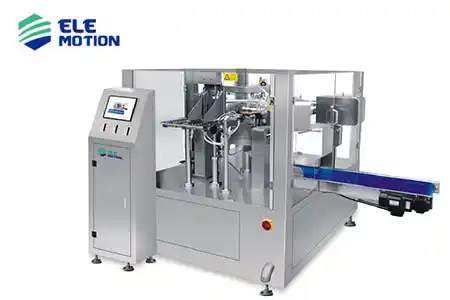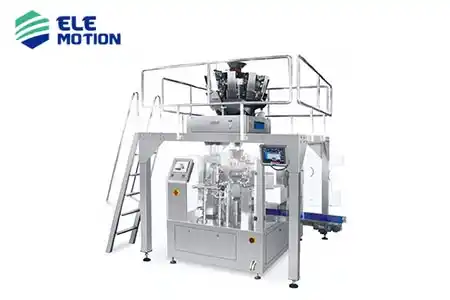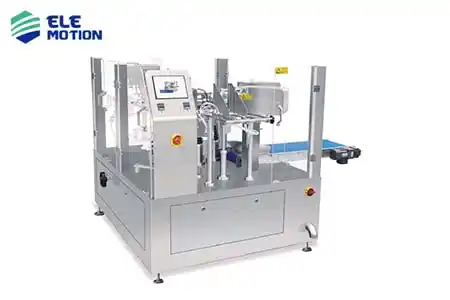


Let’s cut through the marketing noise for a second. If you’re running any kind of food production operation today — a butcher shop, a bustling restaurant kitchen, a central meal-prep facility — you already know this painful truth: the food inside your storage coolers is on a ticking clock. You’ve probably already outgrown whatever clunky external sealer you bought off a shelf. The real question isn’t "should I upgrade" but "how fast can an automatic vacuum packaging machine start paying for itself?" The short answer: faster than you’d probably expect. Automatic sealing technologies cut food spoilage by roughly 40% compared to conventional storage, while independent studies confirm that restaurants using such systems slash produce waste by nearly half . But here’s the uncomfortable part no supplier wants to talk about — your choice of equipment architecture and ongoing maintenance habits determine whether that ROI materializes or evaporates. This isn't about buying a shiny appliance; it's about engineering a preservation ecosystem that actually works for your specific operation.
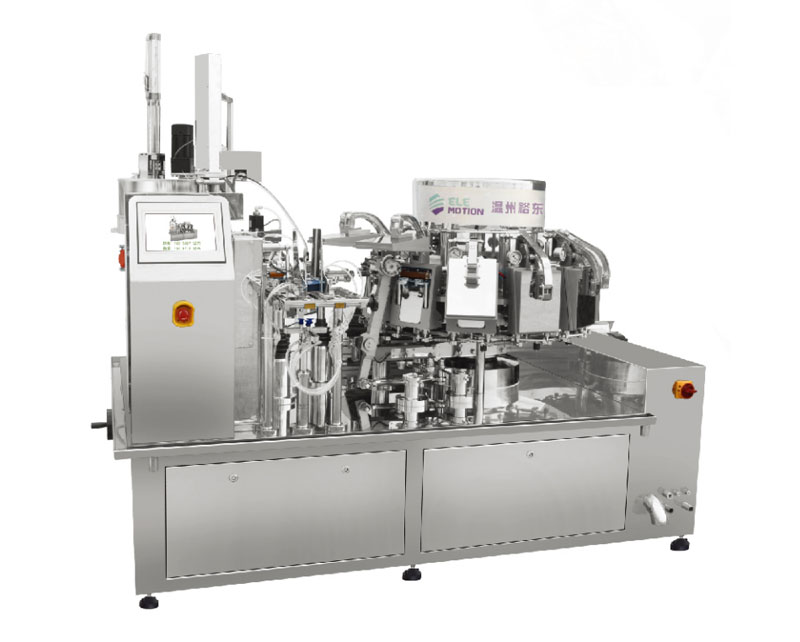
Here’s a scene that plays out daily: a kitchen manager runs a batch of marinated chicken through an external sealer, watches liquid stream into the pump, and then spends an afternoon cleaning up the mess. That’s not a minor inconvenience — it’s a design mismatch that’s costing you real money.
Chamber vacuum sealers operate on an entirely different principle. The entire bag goes inside an airtight chamber. The pump evacuates the whole space, equalizing pressure inside and outside the bag simultaneously . That means liquids won’t boil over or escape. You can seal soups, stews, brines, marinades, and juicy steaks in any orientation without worrying about destroying your machine or ruining the seal. External vacuum sealers work differently — they clamp the bag’s open edge and suck air directly out . That pressure differential pulls liquid straight toward the sealing bar and into the pump. For dry goods, they’re fine. For anything wet, they’re a ticking maintenance nightmare.
Most serious food businesses that push daily volumes above 500–800 packs inevitably hit a ceiling with external units . That’s when you realize a chamber vacuum packaging machine isn’t a luxury — it’s an operational necessity.
Let’s ground this conversation in peer-reviewed science, not marketing fluff. A 2024 controlled study published in Korean Journal for Food Science of Animal Resources compared three packaging conditions for chilled pork over a 12‑day storage period: air packaging (AP), standard vacuum packaging (VP), and vacuum antibacterial packaging (VAP) . The vacuum‑packed groups consistently outperformed air packaging on every metric — total viable count, volatile basic nitrogen levels, sensory attributes, and meat color retention. VP effectively extended shelf life for 3 days beyond AP, and the study concluded that "vacuum packaging could effectively maintain the freshness of chilled pork" . That’s not a marginal improvement — it’s a tangible extension that directly reduces product waste and improves customer satisfaction.
For those handling produce? Research on fresh‑cut onions stored at 4°C for up to 21 days confirmed that vacuum packaging maintains product quality and safety throughout the entire refrigerated storage period . And according to the Food and Agriculture Organization (FAO), approximately 20% of global food exports consist of temperature‑sensitive products, meaning proper packaging isn’t just a quality issue — it’s a logistics and shipping requirement for cross‑border trade.
Every experienced packaging professional will tell you the same thing: the pump is the heart of the machine . Your kitchen may look beautiful from the outside, but if the pump can’t pull and maintain deep vacuum levels, nothing else matters.
Across the market, you’ll encounter two main pump types. Oil‑lubricated pumps deliver deeper vacuum levels — often exceeding 99% air removal — and stand up to continuous heavy use. However, they require regular maintenance: for most commercial applications, pump oil should be changed every 100 hours of operation or quarterly, whichever comes first . Dry pumps eliminate oil changes entirely, making them lower‑maintenance choices for smaller operations and dry‑only applications. But they typically don’t achieve the same ultimate vacuum levels as their oil‑cooled counterparts.
Smart buyers look beyond the pump type to the overall system design. Machines with easily accessible oil drains, visible sight glasses, and filter indicators drastically reduce the friction of routine maintenance. If your team has to disassemble panels to check the pump, trust me — that maintenance won’t happen as often as it should.
One of the biggest mistakes in commercial vacuum sealer purchasing is getting the chamber dimensions wrong. Buy too small, and you’ll be fighting to wedge large cuts of meat inside or looking longingly at an upgrade within six months. Buy too large for your current space, and you’re paying for capacity you won’t use for two years.
Here’s what experienced operators recommend: look at your largest regularly packaged product — a whole pork shoulder, a bulk batch of marinated salmon portions, a 12‑inch sub‑assembly bag — and double the clearance on all sides. That breathing room ensures consistent sealing across varied product sizes without frustrating cramming maneuvers. Also, pay attention to sealing bar length and count. Machines with dual sealing bars can process two bags simultaneously, effectively doubling output without increasing floor space.
A deep‑chamber model matters more than you might think for baggy items or products with dimensional variation — shallow chambers frequently leave residual air pockets around oddly shaped goods. Conversely, if you’re exclusively sealing small, uniform pouches, oversized chambers become wasted footprint.
When vendors throw around “throughput” numbers, they often cite theoretical maximums achieved under ideal conditions — bone‑dry bags, perfect operator alignment, no interruptions. Real production never works that way.
What actually moves the needle is consistent cycle quality at your actual packing density. A machine that runs 800 packs/hour but fails every tenth seal isn’t helping — it’s creating re‑work and frustration. A machine that runs 500 packs/hour with a 99.8% first‑pass acceptance rate, in contrast, builds your team’s confidence and moves product out the door reliably.
The most telling spec? Cycle time per chamber. If you’re looking at a single‑chamber machine with a 40‑second cycle from load to seal to unload, that’s about 90 packs per hour. A double‑chamber model running overlapping cycles can push 180–250 packs per hour without breaking a sweat . For medium‑sized meat processors, delis, or central kitchens, double‑chamber configurations consistently deliver the best balance of throughput and capital cost.
You’d be shocked how many self‑proclaimed “commercial” vacuum sealers produce uneven seals when feeding high‑moisture products into the chamber. This happens because the heating element doesn’t apply consistent temperature across the entire bar length, or because bag alignment isn’t mechanically assisted.
Quality automatic vacuum packaging machines use independent zoning on the impulse bar — meaning the heating element is segmented and can adjust temperature across the bar to match variations in bag thickness or moisture content. That matters because the bag’s edge near the chamber side often cools faster than the middle, and without zoning, you’ll get a strong seal in the center and whispers of a seal near the ends.
Advanced models from manufacturers like ELEMOTION incorporate servo‑driven sealing bar controls, which regulate pressure and duration with far more precision than traditional timer‑based systems . The result is a more consistent, repeatable seal across thousands of cycles — not just the first hour after maintenance.
Here’s a hidden line‑item surprise that catches many first‑time commercial vacuum sealer buyers: chamber machines use smooth/plain bags, which are significantly cheaper than the textured/embossed bags required for external sealers . External sealers need those embossed channels to create air paths for extraction; without them, air pockets remain and seals fail. Chamber machines don’t need those channels — the complete chamber evacuation removes air around the bag naturally, allowing you to use lower‑cost plain bags.
Over a year of daily production, that bag cost differential can amount to thousands of dollars in savings. If you’re currently running a high‑volume kitchen on an external sealer, switching to a chamber system might pay for part of the equipment investment through consumables savings alone.
Smart operators also watch for bag material compatibility beyond just cost. If you’re sealing acidic foods or high‑fat products, certain laminates perform better over extended frozen storage. Always request material compatibility tables from your bag supplier before committing to any long‑term purchase.
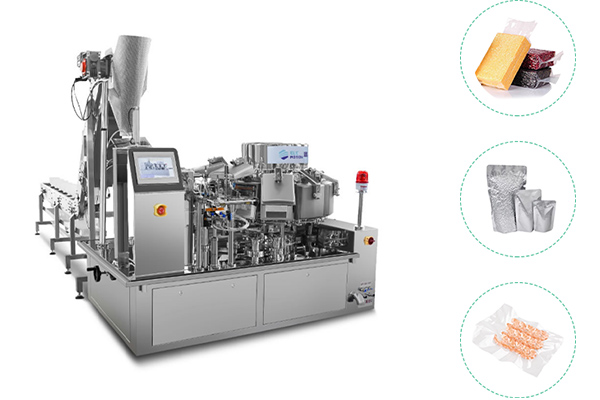
Want to know how a vacuum packaging machine will perform three years from now? Ignore the marketing gloss. Look at how easy it is to maintain.
A well‑designed automatic vacuum packaging machine will have:
Tool‑less access to heating elements for quick replacement
Removable drip trays and wash‑down interiors
Visible filters that can be cleaned without disassembly
Sealing bar tilting options for cleaning underneath
Oil fill and drain ports positioned for easy access
Facilities that run double shifts need equipment that can be cleaned and serviced in under 15 minutes at shift change. If your machine requires an Allen wrench set and YouTube tutorials just to change the sealing tape, that’s not a machine — that’s a productivity drag.
ELEMOTION designs its chamber systems with industrial users in mind: lifelong quality maintenance for core components means less downtime and fewer emergency service calls . That’s the kind of engineering choice that shows up in your P&L statement, not just your equipment spec sheet.
Let’s address the elephant in the room: fully automatic vacuum packaging machines require a larger upfront investment than semi‑automatic models. The core question isn’t whether they cost more — it’s the ROI timeline.
Industry benchmarks indicate that fully automated vacuum sealing systems can reduce packaging labor requirements by 60–70% and increase packaging speed by 300% or more compared to single‑chamber manual units . Automation levels vary, with full‑auto systems typically posted at a 30–50% premium over semi‑auto alternatives . For a medium‑volume meat processor moving 20,000 packs per week, that premium can be recouped in 8–14 months through labor savings alone, not even factoring in reduced spoilage and extended shelf life.
The numbers get even more compelling when you factor in food waste. According to USDA data, 30–40% of the food supply in the US is wasted annually, highlighting the economic and environmental imperative for better preservation . Each ton of food saved through vacuum packaging also prevents 2.5–3 tons of CO₂ equivalent emissions from production and disposal . So your procurement team might be focused on upfront costs, but your sustainability officer — and your customers — care about the waste reduction story.
Beyond food spoilage reduction, automatic vacuum packaging machines are now being evaluated for their packaging material efficiency. Manual packaging lines typically see 1–3% bag waste due to operator errors — misaligned seals, mis‑fed bags, dropped units . Automated monitoring systems can bring that loss rate below 0.1%, saving tens of thousands of dollars annually on bag materials alone.
Some manufacturers are also moving toward recyclable and compostable films compatible with commercial vacuum sealers, particularly in European markets where sustainability regulations are increasingly strict . ELEMOTION has supported customers in various food sectors who successfully reduced packaging waste while improving seal integrity, integrating IoT‑enabled sensors that track oxygen levels below 0.5% and send real‑time alerts when seals deviate from specification . That’s not just packaging — it’s quality assurance data that protects your brand.
After examining dozens of options across the commercial vacuum packaging landscape, here’s what sets ELEMOTION apart from the typical equipment supplier.
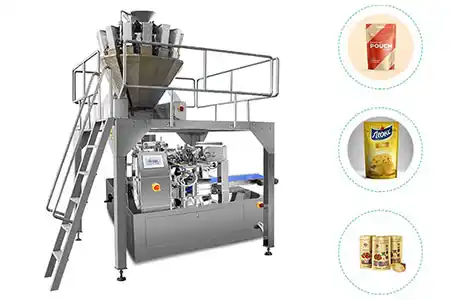
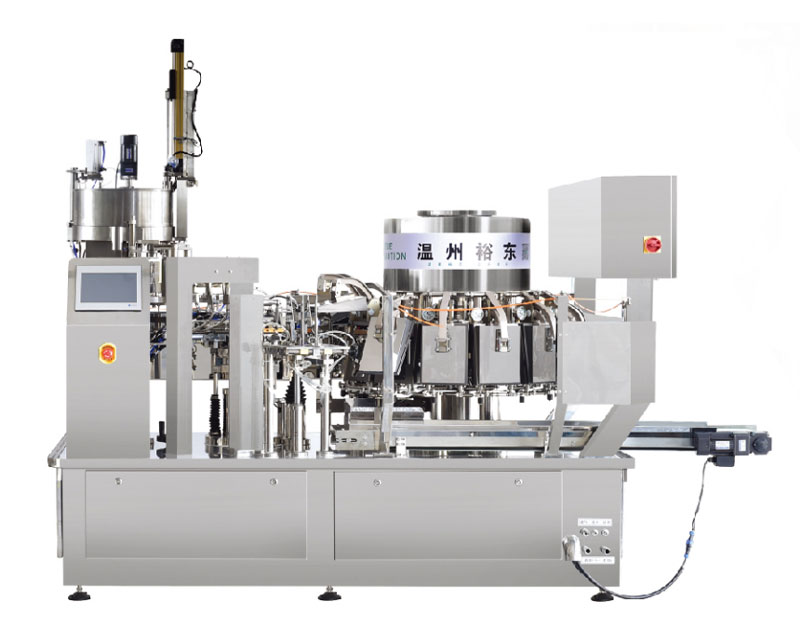
Founded in Shanghai in 2016, ELEMOTION has rapidly grown into a global packaging system supplier serving over 3,600 enterprises worldwide, with annual sales surpassing 1 billion RMB in 2021 . Their modern smart factory in Wuhu drives continuous innovation, and their core product lines — including fully mechanical premade pouch and rotary vacuum packaging machines — are renowned for superior sealing performance, efficiency, and stability .
When you invest in an automatic vacuum packaging machine from ELEMOTION, you’re not just buying hardware. You’re getting a partnership that includes customized solution development, software integration, after‑sales support, and versatile product combinations tailored to your specific product types — whether you’re packaging fresh meat, seafood, ready meals, or delicate baked goods .
Key differentiators of ELEMOTION commercial sealing equipment:
Dual‑bag high‑speed rotary vacuum packaging machines achieving up to 180 bags per minute, integrating vision inspection, data traceability, and remote operation capabilities
Servo‑driven motion control and touchscreen operation, offering precision and usability in one package without complexity creeps
50dB noise levels — quiet enough for open kitchen environments and employee comfort
Modular design options — scale your sealing capacity without replacing major components
Lifelong quality maintenance for core components, reducing total lifecycle ownership costs
Real operators who have transitioned to ELEMOTION systems commonly report reduced spoilage rates, faster changeovers between product types, and significantly fewer service interruptions compared to legacy equipment from other manufacturers.
I recently spoke with a regional meat processor who switched from single‑chamber manual sealers to an ELEMOTION double‑chamber automatic system. Their numbers paint a clear picture:
Day 1–7: Installation and basic training. The team grumbled about learning new controls — standard resistance to change.
Day 8–14: Throughput climbed from 80 packs/hour to 210 packs/hour with fewer rejected seals.
Day 15–30: Labor hours on packaging dropped by 62%. Spoilage returns to the kitchen decreased by an estimated 38%. The equipment paid its first month’s labor savings directly into improved margins.
Their operations manager told me what mattered most wasn’t the speed — it was the psychological shift. The team stopped worrying about whether each seal would hold. They knew it would. That confidence changed how they approached inventory planning and portioning.
Let’s be honest — not every business needs full automation. If your daily packaging volume is under 300 packs, or if you rotate through a dozen different products in small batches each day, a high‑quality semi‑automatic chamber machine probably serves you better. The changeover time on fully automated systems, while improving, still incurs some setup overhead that doesn’t make sense for micro‑batches.
Automatic machines also assume your product dimensions and bag sizes are relatively consistent. If you’re packaging everything from whole fish to loose powders to awkwardly shaped industrial components, the flexibility of a manual chamber machine might be a better fit.
The smart approach: map out your packaging mix today and forecast where you’ll be in two years. If the trend lines point upward toward higher volumes and more consistency, an automatic system is an investment in future capacity, not just current need.
After reviewing market data, scientific studies, and real‑world user experiences, a clear pattern emerges among successful commercial vacuum sealer buyers:
They over‑spec the chamber size by a comfortable margin — future‑proofing against larger product runs.
They prioritize pump quality over flashy features — oil‑lubricated pumps for heavy use, dry pumps for moderate use with dry goods.
They calculate TCO — bag material cost differences, labor savings, and spoilage reduction matter more than purchase price.
They test compatibility with their actual products — wet vs. dry, acidic vs. neutral — before signing.
They choose brands with proven service infrastructure — ELEMOTION’s 3,600+ enterprise customer base and full‑service support model reduce the risk of extended downtime .
The days of guessing with underpowered sealers are over. Automatic vacuum packaging machines aren’t just a technological upgrade — they’re a strategic business decision that directly impacts your bottom line through reduced waste, extended shelf life, labor efficiency, and customer‑facing quality consistency.
Motion‑intelligent, data‑backed, and engineered for continuous production — ELEMOTION delivers automatic vacuum packaging solutions built for food professionals who take freshness seriously. From double‑chamber tabletop models to high‑speed rotary systems, ELEMOTION has the right configuration for your volume, product mix, and facility footprint.

GET A QUOTE