

If you are currently scanning the market for a thermoforming packaging machine, you probably have one question at the top of your mind: Which configuration will actually deliver the lowest total cost of ownership without sacrificing line speed or package integrity? The honest answer isn’t a one-size-fits-all formula. It depends on your material mix (PET, PP, PVC, or aluminum-based laminates), your required throughput (cycles per minute), and the complexity of your cavity geometry.That kind of momentum means more suppliers, more innovation, and—unfortunately—more noise. So let’s cut through the marketing fluff and talk about what actually works on the factory floor.
Too many procurement teams treat a thermoforming packaging machine as just another capital expense line item. I’ve seen food processors sign off on budget-friendly units only to bleed cash on film waste and unplanned downtime six months later. The machines in this category are not commodity hardware; they are the central nervous system of your packaging line. A 2025 analysis on thermoforming ROI put it bluntly: a “cheap” machine that wastes just 3% more plastic—or shakes itself out of alignment every month—can cost you upwards of $50,000 annually in raw material alone. That single efficiency gap often pays for a premium system upgrade in under a year.
The most consequential decision you’ll make is selecting the mechanical architecture of your machine. Let’s break down the three contenders with real-world operating parameters, not vague marketing terms.
Rotary (Roller) Thermoformers operate on a continuous-motion principle where forming, filling, and sealing happen simultaneously on a rotating drum. This design delivers exceptional output—some rotary blister machines exceed 1,000 cycles per minute. However, rotary drum units typically handle only thermoforming and sealing, not cold-forming operations, and they demand precise material consistency. They shine in high-volume, single-SKU environments like pharmaceutical tablet blister packs or standardized brick-pack meat trays.
Flatbed (Platen) Machines work in an intermittent stop-start cycle. While slower (typically 10–20 cycles per minute compared to rotary’s 40–75+), flatbed systems offer something rotary cannot: the ability to run both thermoforming and cold-forming processes on the same platform. This makes them dramatically more versatile for operations that switch between deep-draw trays, complex geometries, and different material families. Setup and changeover are generally simpler, and maintenance tends to be less intensive.
Hybrid (Roller-Plate) machines split the difference. They form using flat plates (offering platen-level precision and material flexibility) but seal with a rotating heat-seal drum for continuous throughput. This configuration is gaining traction among medical device packagers who need both exacting cavity consistency and sustainable output levels.
| Rotary Thermoformer | Flatbed Thermoformer | Hybrid (Roller-Plate) | |
|---|---|---|---|
| Motion Logic | Continuous | Intermittent (stop-start) | Form: intermittent / Seal: continuous |
| Max Dry Cycles | 40–75+ cycles/min | 4–17 cycles/min | 20–43 cycles/min |
| Material Versatility | Lower (thermoforming only) | High (thermo + cold forming) | Very high |
| Best For | High-volume, single SKU | Frequent changeovers, complex shapes | Medical devices, high-mix pharma |
Which one is right for you? If your line runs the same tray format 22 hours a day, rotary wins. If you swap tooling twice a shift across three different product families, flatbed or hybrid is your safer bet. I’ve watched more than one production manager learn that lesson the hard way—after signing for a high-speed rotary that spent half its life reconfigured for the wrong blister pitch.
Manufacturers love to throw impressive-sounding numbers at buyers—“maximum cycles per minute” and “forming area dimensions” top the list. But these headline figures rarely tell you what a machine will actually deliver on your shop floor with your film stock and your operators. Here are the metrics that separate reliable workhorses from demo-floor showpieces.
Energy consumption ranks among the most underappreciated line items in thermoforming economics. A high-end servo-driven thermoformer can slash energy use by 37–50% compared to conventional pneumatic or older-generation electric systems. Servo motors draw power only when in motion, while pneumatic systems require constant compressed air—which leaks, bleeds pressure, and drives up utility bills month after month. For a facility running three shifts, that delta translates into tens of thousands of dollars annually. Some next-generation systems even integrate zone-specific heating controls that target only the areas of film that need forming, drastically reducing radiative heat loss.
A fast cycle is worthless if the 500th tray looks nothing like the first one. This is where servo-driven machines outperform their cheaper pneumatic counterparts across nearly every quality metric. Servo motors provide programmable precision down to fractions of a millimeter, ensuring uniform wall thickness and consistently clean cut-off edges. Pneumatic systems, by contrast, are susceptible to air pressure fluctuations that can throw off alignment, resulting in thin spots, incomplete forming, or inconsistent sealing pressure. For food packaging and medical applications—where consistency is non-negotiable—the reliability gap alone justifies the higher upfront investment.
The latest generation of smart thermoformers (like ULMA’s TFX platform) integrates optimized motion coordination and redesigned vacuum systems that shorten evacuation time by up to 20%, delivering faster, more predictable cycles for high-volume applications. These improvements are especially significant for producers running standardized “brick-packs,” where cycle-time stability and vacuum efficiency directly determine throughput and package integrity.
In the food sector—particularly meat, poultry, and ready meals—thermoforming machines deliver modified atmosphere packaging (MAP), vacuum skin packaging (VSP), and traditional vacuum-sealed formats. The challenge here is twofold. First, you need deep-draw forming to accommodate irregular product geometries (a bone-in pork chop, for instance, doesn’t conform gracefully to a flat cavity). Second, you need absolute seal integrity to prevent purge leakage and spoilage. The stakes are high: a compromised seal on a MAP tray means oxygen infiltration, the start of microbial growth, and a package that gets rejected at the retail receiving dock—or worse, reaches the consumer.
Leading industry players are now prioritizing mono-material compatibility to meet sustainability mandates. The TFX thermoformer, for instance, is engineered to run thinner base films without sacrificing package strength, enabling processors to reduce plastic consumption while maintaining the structural rigidity expected by retailers. This capability matters because regulatory pressure on single-use plastics isn’t going away—and recyclable packaging is rapidly shifting from “nice to have” to “table stakes.”
Medical packaging imposes a completely different set of constraints. Sterility, traceability, and regulatory validation dominate every decision. GMP-compliant machines like Multivac’s RX 4.0 feature glass enclosures and RFID-coded molds that monitor format changes and ensure correct positioning—requirements that flow directly from FDA and EU MDR standards. A thermoforming packaging machine bound for a medical cleanroom needs documented validation protocols, seamless data capture for audit trails, and typically, the ability to run both thermoforming and cold-forming aluminum (for high-moisture barrier blister packs).
Here’s a piece of hard-earned advice: If you‘re packaging Class II or Class III medical devices, do not let price be your primary selection criterion. Cutting corners on forming precision, seal validation, or documentation integration is a recipe for regulatory pain. The cost of a recall—or worse, an FDA warning letter—dwarfs any upfront savings on equipment. Spend the extra money on a system with validated change control, recipe management, and production data export capabilities. Your quality assurance team will thank you.
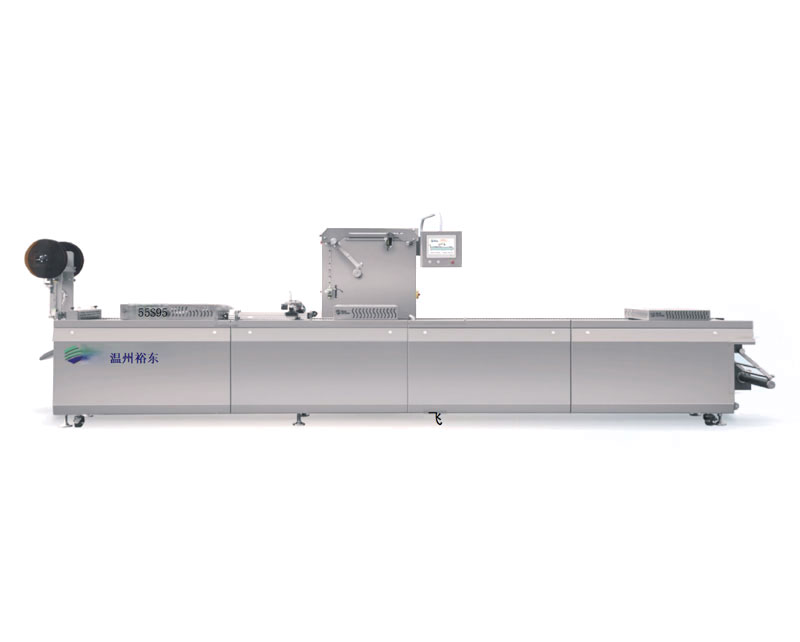
Let’s talk money. The purchase price of a thermoforming packaging machine typically represents only 30–40% of its total cost over a five-to-seven-year lifecycle. The rest lives in three places: film material consumption, energy use, and maintenance downtime.
Material savings through precision. Plastic sheet accounts for roughly 70% of production cost in high-volume thermoforming operations. A servo-driven system with web tensioning accurate to 0.1mm can reduce skeleton waste bridge width to the absolute minimum, often cutting scrap by 3–5% compared to mechanically tensioned systems. For a line consuming $1.5 million in raw film annually, that 3% improvement saves $45,000 per year—directly to the bottom line.
Maintenance downtime. Pneumatic systems require regular compressor checks, hose replacements, and valve maintenance. Servo-driven machines have fewer moving parts prone to wear, resulting in less downtime and lower long-term operating costs. Real-world data from food processors who upgraded from unreliable older equipment to modern servo-driven thermoformers shows downtime reductions large enough that operators can stop spending mental energy calculating the cost of each shutdown. One gourmet foods manufacturer dealt with “seven years of hell” dealing with an unreliable machine before switching to a new thermoformer that reduced downtime and improved setup time dramatically.
ROI payback speeds. Advanced systems with targeted temperature control can achieve energy savings significant enough to deliver full return on investment in six months under the right production conditions. In large-scale tray-forming applications, operational savings projections for upgraded thermoformers often reach hundreds of thousands annually, with paybacks ranging from 10 to 13 months.
Two industry examples illustrate this principle in action. Cucina Fresca, a Seattle-based gourmet foods manufacturer, spent seven years battling an unreliable form-fill-seal thermoformer that never worked consistently, was expensive to maintain, and lacked decent service support. The owners stopped calculating downtime costs because “there wasn’t anything we could do about it, and honestly, I didn’t want to know how much it was costing us”. When they finally replaced it with an Ossid ReeForm T45 thermoformer, the new machine arrived three weeks after first contact, and the manufacturer installed it on-site in about 10 days, training staff on preventive maintenance procedures simultaneously.
By contrast, Placon—a 55-year-old thermoforming veteran—recently expanded production capacity by installing new thermoforming equipment across multiple facilities to meet growing demand for sustainable packaging solutions. The company focuses on accelerating customer approval timelines with prototype turnaround under five days, leveraging ISO-certified cleanrooms for medical packaging applications.
The difference between these two outcomes isn’t just about machine specifications. It’s about supplier philosophy—whether the manufacturer sells boxes with moving parts, or designs production solutions with post-sale support baked into the business model.
After two decades of watching procurement teams wrestle with the wrong thermoforming packaging machine choices, our team at ELEMOTION decided to build equipment differently. We don‘t just ship standardized machines and hope they fit your application. We start by understanding your film types (PET, PP, PS, PLA, or aluminum laminates), your cavity depths (positive and negative draw), your required cycle targets, and your facility’s power and compressed air infrastructure. Then we engineer custom-configured equipment that marries high throughput with material efficiency—not at the expense of either.
ELEMOTION’s servo-driven thermoforming platforms incorporate:
Full-station servo control (heating, forming, trimming, stacking) for ±0.1mm positional accuracy
Closed-loop tension management that cuts edge trim waste by an average of 12–18%
Zone-calibrated IR heating systems that reduce energy consumption by 25–35% compared to conventional ceramic heaters
Modular tooling interfaces that support format changeovers in under 20 minutes without specialized tools
The result? A thermoforming packaging machine that arrives not as a “one-size-fits-nobody” crate of stamped parts, but as a production asset tuned to your specific packaging challenges. Whether you‘re forming hinged containers for takeout meals, blister cavities for medical disposables, or deep-draw trays for frozen entrees, ELEMOTION delivers equipment that integrates with your existing upstream and downstream automation—not a standalone island that your maintenance team learns to dread.
Here’s the part most manufacturers won‘t tell you: Approximately 70–80% of thermoforming issues I’ve diagnosed on factory floors come down to three problems—uneven heating profiles, mold misalignment, or inconsistent vacuum evacuation—none of which are inherent to the technology but all of which trace back to poor machine setup, inadequate support documentation, or underspecified components. ELEMOTION‘s commissioning process includes on-site validation runs with your actual film and tooling, operator training on preventive maintenance protocols, and remote diagnostic access for our engineers to support your team in real time when anomalies appear.
Before you issue that purchase order or sign that supplier agreement, run through this abbreviated checklist:
1. Validate your actual throughput requirements. Is your production truly limited by cycle time, or by upstream filling/downstream case packing? Over-specifying speed you can’t utilize is expensive theater.
2. Test with your actual film stock. Ask potential suppliers to run sample production runs using your film rolls—not their perfectly preconditioned demo material. Watch for film wander, uneven heating, and trimming issues at production speed.
3. Calculate TCO, not purchase price. Estimate material savings, energy reduction, and projected maintenance downtime. A machine that costs 30% more upfront but cuts film waste by 5% and energy by 25% will out-earn its cheaper competitor within 18–24 months.
4. Audit service response commitments. When a sealing station fails at 2 AM on a Saturday, will replacement parts arrive by Monday morning? Does the manufacturer maintain local spare parts inventory, or do you wait for air freight from across an ocean?
5. Match machine type to your operational reality. High-volume, single-format? Rotary excels. Frequent changeovers across diverse formats? Flatbed or hybrid is your safer path.
If you’re tired of compromising between speed and reliability, or between material efficiency and output consistency, ELEMOTION wants to be part of your next packaging investment conversation. Contact our engineering team to discuss your application requirements, arrange a material test run at our facility, or request a custom equipment proposal with full TCO modeling.

GET A QUOTE