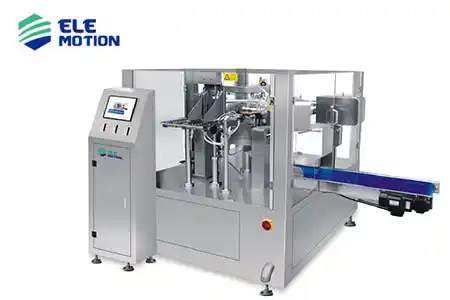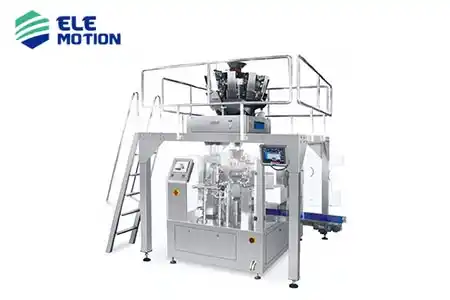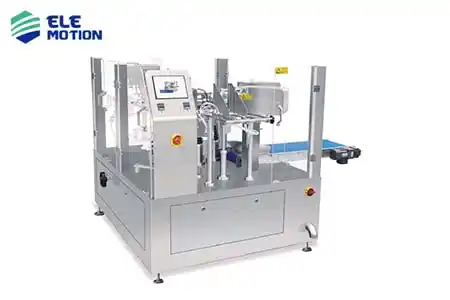


I have walked into enough food factories and co-packing facilities to know one uncomfortable truth: most production managers spend weeks researching a pouch packing machine, and about 40% of them still end up with something that underdelivers. The seals don't hold at high speed. The changeovers eat an entire shift. The promised "50 bags per minute" turns into 37 on a good day.
The real decision has less to do with spec sheets and everything to do with matching machine architecture to your specific product behavior and production rhythm. Here is what I have learned, one broken seal and sleepless commissioning night at a time.
.jpg)
Most sourcing guides start by asking you to pick between a premade pouch packing machine and a vertical form fill seal system. That framing has always bothered me. It treats speed as the only variable — VFFS wins on throughput, premade pouch wins on appearance. Move on.
The reality is messier. I watched a snack food company in Malaysia run parallel lines: VFFS on the commodity product, a rotary premade pouch machine on the premium line. The VFFS could push 120 bags per minute with nitrogen flushing, no question. But the premade line, running at 45 bags per minute, delivered zero leakers and zero rejected pouches over an entire shift. The "slower" machine was actually more profitable per hour of runtime.
A VFFS machine forms pouches from rollstock film and typically delivers 50–300+ bags per minute, with film costs running roughly 30–50% lower than premade pouches. It dominates high-volume, standard-format production: snack foods, sugar, detergent, coffee. But changeovers take 30–45 minutes, and print registration on complex graphics tends to shift at speed.
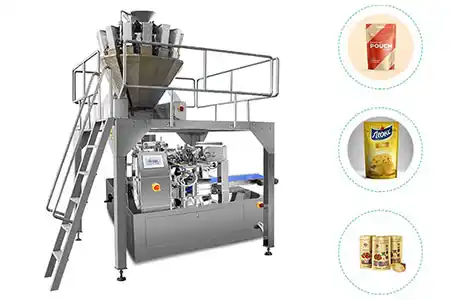
A premade pouch filling and sealing machine handles pre-formed, pre-printed pouches — stand-up, zipper, spout, gusseted, you name it. Speeds typically sit between 30–70 bags per minute, but changeovers can be as quick as 10–20 minutes. You get jaw-dropping shelf presentation because the bag was printed flat before forming, with zero distortion. The trade-off: each pouch costs more, and you are managing a separate bag supplier relationship.
Where this distinction actually matters:
| Factor | VFFS | Premade Pouch |
|---|---|---|
| Product fragility | Gravity-fed tube can damage cookies, chips, electronics | Product drops gently into open pouch |
| Shelf appeal | Print distortion at seal edges common | Pre-printed bags; sharp, vibrant graphics |
| SKU variety | Painful changeovers for multi-SKU lines | Quick-change gripper arms; ideal for co-packers |
| Sticky or irregular products | Limited; requires special augers | Handles mochi, frozen dumplings, sauces, hardware |
| Material cost | Lower (rollstock film) | Higher (third-party bag maker) |
Here is the rule of thumb I give buyers: match the machine to your weakest-link product — the one that jams, leaks, or damages most easily — not your average product. If your line runs 20 SKUs and three of them are fragile or irregularly shaped, a VFFS will give you nightmares. Conversely, if 90% of your output is a single granule product running 24/7, buying a premade pouch system is overpaying for flexibility you will never use.
I have sat through enough supplier presentations to develop an allergy to marketing spec sheets. "Up to 80 bags per minute" usually means "under ideal conditions with a perfectly free-flowing product, brand-new film, and an operator who has been running the machine for three years." Here is what actually correlates with long-term reliability.
Pouch width range, not just the max. A machine that handles 60–300mm is useful. A machine that handles 60–300mm pouch width and also supports the specific bag type you actually run — stand-up pouch, zipper pouch, side gusseted bag, three-side seal, four-side seal, or eight-side seal — is where the flexibility lives. I once saw a buyer spec a machine at 80mm minimum pouch width, only to discover six months later that their new product line required 65mm. That was a $27,000 mistake.
Filling accuracy tolerance, tested with your product. Published specs often quote ±0.5–1.5% filling accuracy, but this varies dramatically by product type. Fine powders behave differently from coarse granules. Liquids are another world entirely. The only number that matters is the one your supplier achieves during a material trial with your actual product — not their demo powder, not their standard granule. Send samples. Demand video. If they refuse, walk away.
Cam and bearing quality over rated speed. A machine rated for 80 bags per minute that uses generic bearings will deliver less usable output than a slower unit running Japanese raw steel cams, THK bearings, and SMC pneumatic components at 55 bags per minute — reliably shift after shift. Look for brands like Mazak CNC machining (with error tolerances as low as 0.0005mm), Schneider frequency inverters, and PID temperature controllers. These aren't luxury features; they determine whether your seals hold consistent at 5 PM on a Friday.
Let me share a real example. A powdered supplement company I worked with was using a machine with ±7% filling accuracy. On a 30g pouch, that's 27.9g to 32.1g. Over a million pouches annually, even giving away a conservative 0.5g per pouch meant 500kg of product — roughly $12,000 at their raw material cost — literally handed out for free. When they switched to a machine with ±1% accuracy, that annual loss shrank to roughly $1,700. The price difference between the two systems paid for itself in under 18 months.
Too many buyers approach this backwards. They pick a machine and then try to force their packaging design to fit. The pouch is the constraint. Here is how the major pouch types map to machine selection:
Stand-up pouch (doypack): The retail shelf champion. Requires precise bottom gusset forming and stable sealing to keep the pouch upright. These pouches dominate in coffee, snacks, pet food, and premium dry goods. If this is your primary format, look for a machine with adjustable vacuum pressure to accommodate different film thicknesses and barrier laminations.
Zipper pouch: Consumer convenience drives this format — resealable, easy to open, promotes freshness over multiple uses. The machine requirement here is zipper alignment precision; if the zipper track drifts by even 1–2mm, you get leakers and furious customers. Expect higher machine complexity and cost relative to standard flat pouch systems.
Spout pouch: Think baby food pouches, energy gels, reusable detergent refills. These require both filling and capping stations, plus additional capping torque calibration to prevent leaks during transport. Dedicated spout pouch machines exist, but many standard rotary premade pouch packing machines can accommodate spout tooling with the right configuration.
Gusseted pouch: Side or bottom gussets allow expansion, making these ideal for coffee beans, bulky pet food, or irregularly shaped products. The engineering challenge is gusset folding during filling — the pouch must open cleanly without catching or tearing, especially at higher speeds.
Pillow pouch / three-side seal / four-side seal: These are the VFFS staples. Cost-effective rollstock film, simple forming, high-speed output. Perfect for single-serve sachets, sugar sticks, ketchup packets, and seasoning pouches. Speed ranges of 40–120 bags per minute are typical for these formats.
My advice after watching dozens of production lines: if you plan to run more than three pouch formats, invest in a machine engineered for quick format changeovers — adjustable gripper arms, stored recipes on the HMI, and tool-free adjustment points. If you are committed to one format at high volume, optimize for speed and seal consistency on that single format.
Not all stamps carry equal weight, and I have seen buyers overpay for certification portfolios that added zero value to their operation.
CE certification is non-negotiable if you are shipping into the EU. It confirms compliance with the Machinery Directive 2006/42/EC and relevant harmonized standards like EN 415 for packaging machinery safety. A legitimate CE mark means the manufacturer has prepared technical documentation, conducted a risk assessment per EN ISO 12100, and issued a Declaration of Conformity. If your supplier cannot produce these three documents, the CE mark on their machine is probably decorative.
ISO 9001 signals that the manufacturer operates a documented quality management system. It matters, but less than on-time delivery metrics and reorder rates — real-world performance data that reveal whether the quality system actually functions. A supplier with ISO 9001 and a 94% on-time delivery rate is potentially more risky than one without certification but a spotless 98% delivery record. I have seen both.
FDA compliance for food-contact materials is critical if you are packaging for the US market. Look for stainless steel construction (SUS304 minimum), GMP-compliant design, and validated cleaning protocols — not just a certificate on the wall but evidence the machine is built for hygienic operation.
One of the most expensive misconceptions I encounter: customization means the supplier builds a one-off machine from the ground up. In reality, the best customization is modular — starting from a proven platform and adapting specific stations or components to your product and production environment.
A well-designed pouch packing machine should offer:
Interchangeable filling systems — auger filler for powders, multi-head weigher for granules, piston pump for liquids, all fitting the same base machine
Optional nitrogen flushing for shelf-life extension on oxygen-sensitive products like coffee, nuts, and powdered milk
Date coding integration — hot stamp, inkjet, or laser — that syncs with the machine's PLC
Vision inspection for seal integrity, pouch presence, and fill level verification
Multiple pouch feeding configurations — manual loading for small batches, automatic magazine feeding for continuous runs, robotic pick-and-place for complex formats
Multi-language HMI with stored recipes, fault diagnostics, and remote access capability
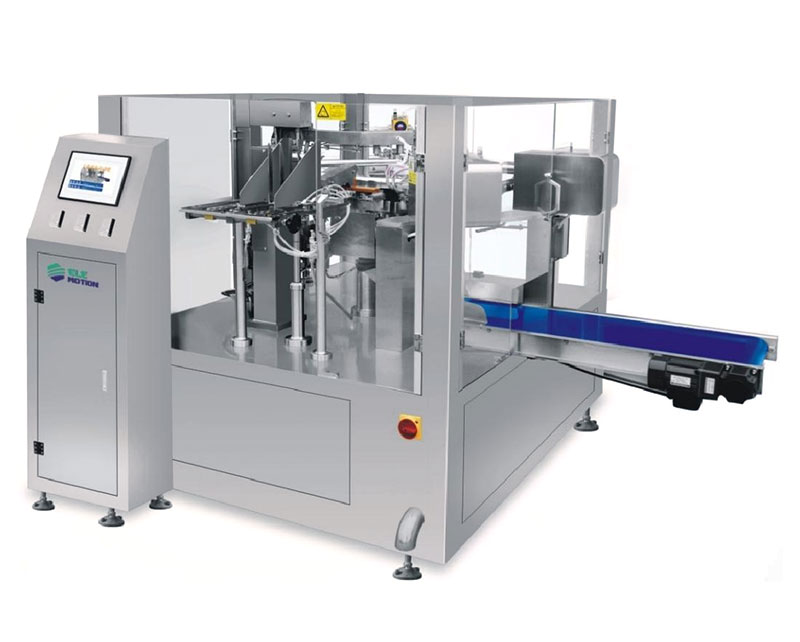
I recently visited a ELEMOTION installation where the same base platform was running granule filling on one shift and liquid sauce packaging on the next — same machine, different tooling, changeover completed in under 20 minutes. That kind of versatility is what modular customized packaging solutions should deliver.
Before you request a single quotation, work through these. I have developed this list over fifteen years of commissioning packaging lines, and skipping any one of them has cost someone I know real money.
What is the actual tested speed with my product, not your demo powder? Demand a video of your specific material running at the claimed throughput.
What is the mean time between film jams or seal failures at rated speed? If they cannot answer, they have never tracked it. That is a red flag.
Can you provide changeover time data for at least two different pouch sizes with the same operator? Not the factory technician's time — a real operator's time.
Which specific brands of bearings, cams, PLC, and pneumatics are used? Generic answers like "Japanese quality" are insufficient. Insist on part numbers.
Are CE/ISO certificates current and accompanied by technical documentation? Request the actual DoC and risk assessment, not just the wall certificate.
What is the lead time for critical spare parts shipped to my country? Sealing bars, heating elements, belts, and sensors. If these take six weeks, you are carrying expensive inventory.
Do you support remote troubleshooting and what is the average response time? Anything over two hours during production hours should give you pause.
Can I speak with two customers who have run this machine for at least 18 months? Not new installations. Established users who have been through a full maintenance cycle.
Having evaluated equipment from manufacturers across Guangdong, Zhejiang, and Jiangsu provinces — the global epicenter of packaging machinery production — I have learned to distinguish between suppliers who chase specifications and those who engineer for production reality.
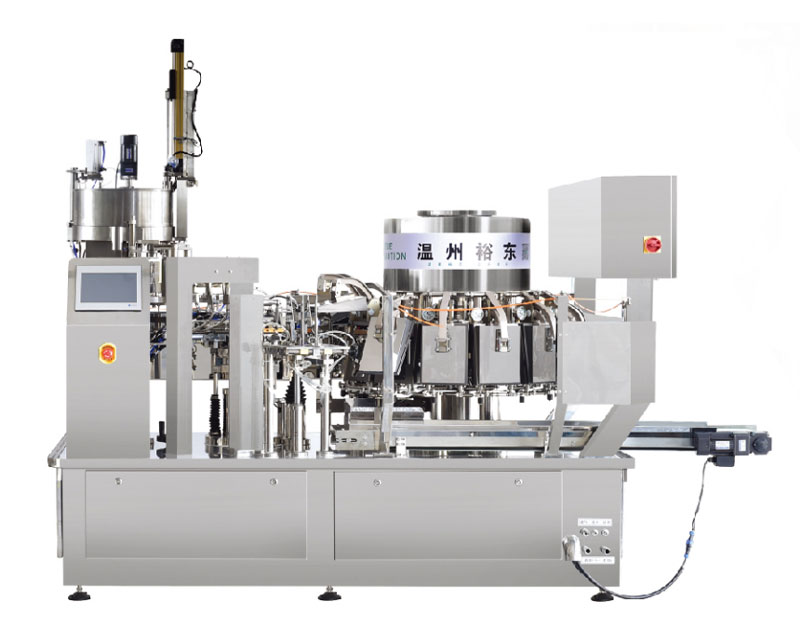
ELEMOTION (Wenzhou ELEMOTION Automation Technology Co., Ltd.) falls squarely into the latter category. Their pouch packing machine line, serving food, pharmaceutical, and daily chemical industries, is built around measurable precision rather than marketing claims:
Bag width range: 60–300mm, covering everything from sachets to family-size pouches
Bag length range: 100–450mm
Packing speed: 20–80 bags per minute, depending on product characteristics and pouch format
Supported pouch types: Three-side seal, stand-up pouch, ziplock bag, stand-up ziplock, side gusseted, four-side seal, eight-side seal
Core components: Japanese raw steel cams, THK bearings, SMC/Fuji electrical components, Mazak CNC machining with 0.0005mm error tolerance — the kind of engineering that keeps machines running consistently years after commissioning
What sets their approach apart: every machine is adjusted and tested with actual materials before shipping, not just run through a dry cycle. That step catches alignment issues, sealing irregularities, and filling discrepancies that would otherwise surface during your commissioning — when downtime costs real money.
For production lines handling powders, granules, liquids, pastes, or irregular solid products across multiple pouch formats and frequent SKU changes, ELEMOTION's pouch packing solutions deserve a close evaluation alongside any other shortlisted supplier.
Price signals are noisy in this market. Entry-level automatic pouch packing machines start around $500–$700 for basic models suited to startups or small-batch production. Mid-range systems ($1,000–$3,000) balance performance and cost for growing operations. Premium multi-station rotary systems with advanced automation, precision components, and CE/ISO certification exceed $5,000 and can reach $16,000–$24,000 for fully configured industrial-grade machines with SUS304 construction, multi-head weighing, and integrated inspection systems.
Importantly: price per machine is the wrong frame. Total cost of ownership is the right one. Factor in:
Spare parts inventory and lead times
Training and commissioning support (on-site or remote)
Expected maintenance intervals and labor
Energy consumption and compressed air requirements
Film or pouch waste rates at production speed
Downtime cost per hour of your particular production line
I have seen a $9,000 machine become more expensive than a $16,500 one within two years, purely through higher scrap rates, more frequent downtime, and parts that took weeks to arrive. Price tags lie. Production data doesn't.

GET A QUOTE