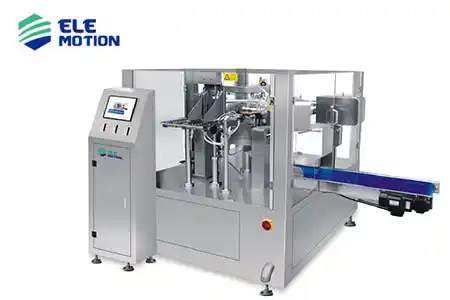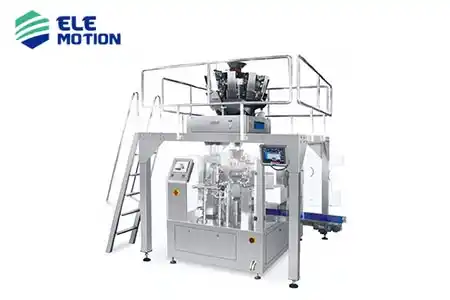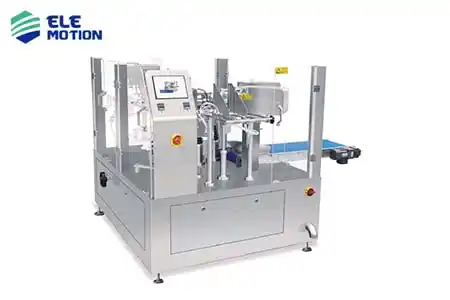


If you‘re searching for a pouch packing machine right now, here’s the honest answer you won‘t get from most sales brochures: the right machine depends on two things—your actual daily output and your product’s physical behavior. Buy based on horsepower numbers in a PDF and you‘ll overpay. Buy based on the cheapest quote and you’ll spend twice that on downtime within eighteen months. I‘ve walked through enough food factories and pharmaceutical packaging lines to know that the machine that makes one plant manager look like a genius will turn another’s production schedule into a nightmare. This article lays out what actually matters when you‘re evaluating equipment, drawing on real throughput data, cost comparisons, and the kind of nitty-gritty details that vendor demos conveniently skip.
The global pouch packaging machine market reached USD 50.17 billion in 2025 and is tracking toward USD 81.71 billion by 2034 at a CAGR of 5.57%. That kind of growth doesn‘t happen because factories are replacing like-for-like equipment. It’s happening because the machines themselves have evolved into something fundamentally different from what came before.
Walk into a modern packaging line and you‘re looking at a system that integrates servo-driven film transport, multi-head weighing, nitrogen flushing, date coding, vision inspection, and IoT-enabled predictive maintenance into a single continuous process. The ceiling on throughput has been pushed higher in the last five years than in the previous twenty. A decade ago, 60 bags per minute was the benchmark for a well-tuned line. Today’s best-in-class automatic pouch filling machines are easily hitting 30 to 120 bags per minute, with duplex configurations on horizontal rotary machines pushing 110–120 ppm. That‘s not marketing fluff—it’s what production engineers are recording on their shift reports.
But speed alone is a trap. The real differentiator in 2026 is how the machine handles changeover. I‘ve seen facilities running 15 different SKUs on a single line, and the difference between a 10-minute pouch size changeover and a 2-hour retooling nightmare can swallow an entire shift’s margin. This is where the market is segmenting—not just by speed, but by operational flexibility.
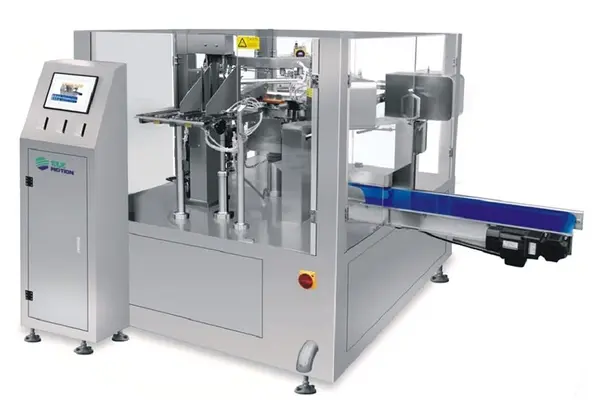
Three macro forces are reshaping procurement decisions faster than most buyers realize。
Rising labor costs across North America, Europe, and Southeast Asia have turned semi-automatic and manual pouch lines into a financial liability at scale. A facility running pre-made pouch systems with manual loading might employ six operators per shift. The same throughput on a fully automated rotary pouch filling and sealing machine with automatic pouch feeding? One operator who spends most of their time monitoring a dashboard. That labor delta alone can pay back the equipment cost in under two years, and that‘s before you account for the consistency improvement.
This isn’t about marketing anymore. European Extended Producer Responsibility schemes expanded significantly in 2025, increasing fees for hard-to-recycle packaging and forcing producers to fund collection systems. The knock-on effect for equipment buyers: your next machine needs to run mono-material films, recyclable laminates, and biodegradable pouch materials without throwing sealing errors every ten cycles.
Here‘s what the data says: modern eco-mode pouch machines reduce material waste by 58–68% through smart film tracking and predictive jam prevention. Facilities using precision pouch systems have driven pre-consumer waste down from approximately 5.8% to just 1.2%—a difference that translates to real money at 20 million packages per year. I’ve seen plants that upgraded specifically because their old equipment couldn‘t maintain seal integrity on thinner-gauge sustainable films. That’s going to accelerate through 2030.
Walk through any grocery aisle. Count the pouch variations—stand-up, spouted, zippered, quad-seal, flat-bottom with gussets. Now imagine running all of those on a single packaging line within a week. The old paradigm of dedicating one machine to one format is crumbling under the weight of multi-SKU production schedules. This is why rotary premade pouch machines are gaining share: they can switch between pouch sizes and styles in 15–30 minutes, versus the 2+ hours often required to retool film-feed systems on form-fill-seal lines.
This comparison gets oversimplified in every equipment catalog. Let‘s be precise.
VFFS (Vertical Form-Fill-Seal) machines form pouches inline from rollstock film, fill them, and seal them in a continuous vertical motion. They dominate high-volume, standardized production. Throughput ranges from 60–120 bags per minute (and up to 300+ on specialized snack lines). Film costs run 20–40% cheaper than premade pouches on a per-unit basis, and material waste typically stays in the 2–5% range. Entry-level VFFS systems start in the 40,000–40,000–60,000 range, with high-spec models climbing to 150,000–150,000–300,000.
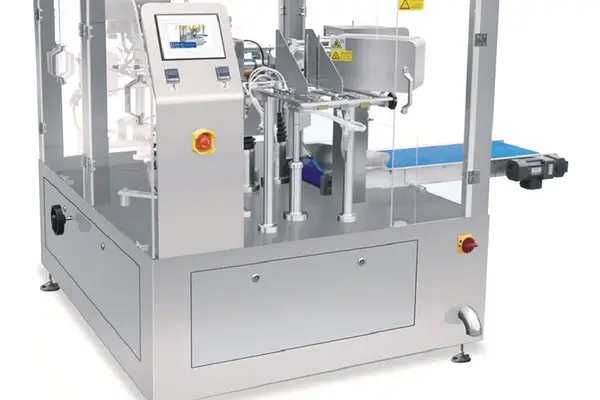
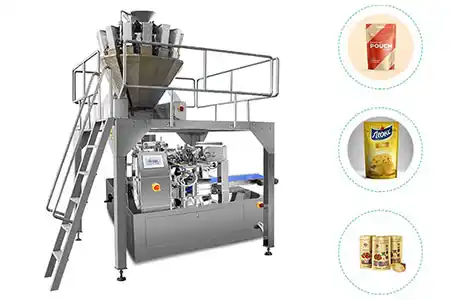
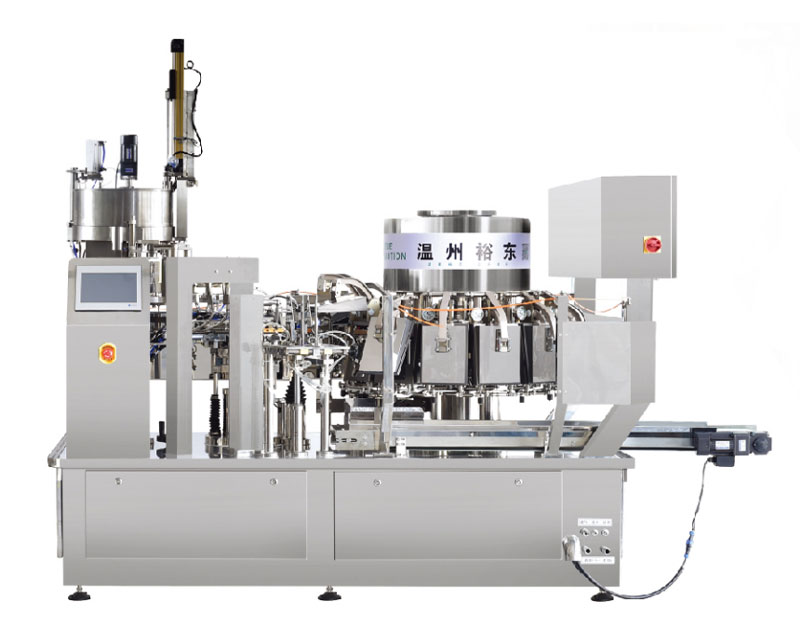
Premade Pouch Packing Machines use pre-formed bags—stand-up pouches, zipper bags, spouted pouches—that are mechanically opened, filled, and sealed on a rotary or inline platform. They‘re slower, typically 30–80 bags per minute, but the output quality and format versatility are on a different level. These systems dominate premium food, pet food, and nutraceutical lines where shelf presence and resealable features justify the higher per-unit packaging cost. Capital cost runs higher: 80,000forbasicmodels∗∗to∗∗80,000forbasicmodels∗∗to∗∗400,000+ for fully automated lines with integrated checkweighing and case packing.
The mistake I see repeatedly: buying a VFFS system for a multi-SKU product line to save on film cost, then hemorrhaging money on changeover downtime. Conversely, buying a premade pouch system for a single high-volume SKU and overpaying on bag cost by 30–50% per unit. The machine has to match the production reality, not the other way around.
If your procurement plan assumes today‘s film specifications will still be compliant in 2028, you’re taking a risk you don‘t need to. The flexible green packaging market is projected to grow from USD 21.19 billion in 2025 to USD 32.79 billion by 2032 at a 6.43% CAGR—and that growth is pulling equipment specifications along with it.
The technical challenge is straightforward: mono-material films and bio-based laminates behave differently under heat sealing than traditional multi-layer petroleum-based films. The sealing window narrows. Temperature control becomes less forgiving. Machines designed before 2020 with simple PID-based heat control often can’t hold tolerances tight enough for these materials at production speed.
Brands switching to PLA bioplastics and PCR films are finding that modern servo-driven premade pouch machines can handle the material transition without sacrificing throughput—provided the machine was engineered for that purpose. Independent testing has shown individual production lines cutting virgin plastic consumption by approximately 4.2 tons per year after transitioning to mono-material pouches on compatible equipment. That‘s a sustainability metric that also happens to translate into lower EPR fees in regulated markets.
ELEMOTION equipment is engineered from the ground up for multi-film compatibility, handling everything from traditional laminated films to recyclable mono-material structures without sacrificing seal integrity or requiring constant operator recalibration.
Equipment price tags are the shiny distraction. Here‘s what actually drives the numbers over a 5–7 year machine lifecycle:
Material waste rate: The delta between 2% waste and 8% waste on a line producing 15 million pouches annually is roughly 900,000 wasted pouches per year. At even 0.05perpouch,that’s0.05perpouch,that’s45,000—every year。
Labor allocation: Fully automated pouch packaging system configurations with automatic loading, nitrogen flushing, and integrated coding can reduce operator count from 4–6 to 1–2 per shift.
Downtime from changeovers: If you‘re running 8 different pouch formats across a month and each changeover costs 90 minutes of lost production on a VFFS line versus 20 minutes on a premade pouch system, the annual difference exceeds 110 hours of production time.
Maintenance burden: Servo-driven systems consume roughly 38% less energy than pneumatic equivalents, and smart power management cuts idle energy waste by about 67%. That flows directly to the operating budget.
I‘ve done the back-of-napkin math with plant managers who were surprised to find their "cheaper" machine carried a 40% higher total cost of ownership over five years, almost entirely due to film waste and changeover inefficiency.
ELEMOTION systems are designed with quick-change tooling and servo-driven precision controls that directly compress changeover times and reduce film waste—variables that dwarf the initial equipment price difference when you run the five-year numbers.
After years of watching lines run, here‘s what separates equipment that earns its keep from equipment that collects dust and maintenance tickets:
Filling accuracy that holds across shifts. For fine powders, ±0.5g tolerance is achievable; for granules, ±2g. If your spec sheet claims tighter than this, demand a live demonstration with your actual product.
Seal integrity that doesn‘t drift after three hours of continuous running. The best systems maintain consistent seal quality through adaptive temperature algorithms and real-time film tension monitoring.
Material compatibility that extends beyond the demo day. Ask the manufacturer to run your actual film—not their optimized sample—at your target speed for at least 30 continuous minutes.
Integration readiness for upstream and downstream equipment: conveyors, multi-head weighers, checkweighers, metal detectors, case packers. A machine that can‘t talk to the rest of your line creates manual workarounds that defeat the purpose of automation.
ELEMOTION takes a different approach from most equipment suppliers I‘ve encountered. Rather than offering a fixed catalog of models and asking the customer to fit their needs into pre-defined specifications, ELEMOTION starts each engagement with a production needs analysis that examines product characteristics, throughput targets, facility constraints, and future growth projections before recommending any configuration.
This customized pouch packing solution model is particularly valuable for manufacturers in food, pet food, nutraceutical, and pharmaceutical applications where product behavior—flowability, dustiness, moisture sensitivity—varies significantly and generic machine specs often miss critical details. The ability to specify filling systems tailored to the product (auger for powders, multi-head weigher for granules, volumetric pump for liquids) rather than adapting the product to a standard filling head makes a measurable difference in both throughput and giveaway.
ELEMOTION‘s vertical form-fill-seal systems and premade pouch rotary machines are built on a modular architecture that allows phased automation upgrades—you can start with semi-automatic operation and add automatic feeding, inline printing, and integrated downstream equipment as production scales. This matters because I’ve seen too many companies over-invest in full automation upfront only to discover their actual throughput doesn‘t justify the capital, or under-invest in key automation points and create a bottleneck that strangles the entire line.
No single pouch packing machine is optimal for every application. If you’re running 200,000 identical pillow packs of snack food daily, a high-speed VFFS system is almost certainly your lowest cost-per-pouch path. If you‘re running 20 different pouch formats in batch sizes of 5,000–15,000 units, a premade pouch filling and sealing machine with rapid changeover capability will pay for its higher per-unit film cost through uptime alone.
The machines exist to serve your production reality, not the other way around. Whenever a vendor demos a machine at a trade show, ask to see a changeover procedure performed in real-time—from the last good package of Format A to the first good package of Format B. If they won’t do it, or if it takes longer than what‘s on the spec sheet, you’ve just learned more than any brochure could tell you.

GET A QUOTE