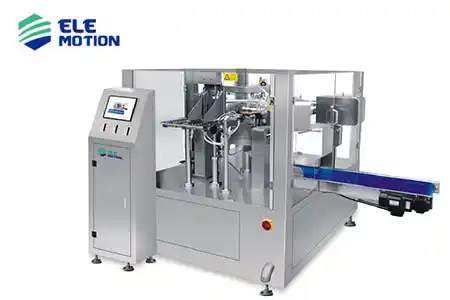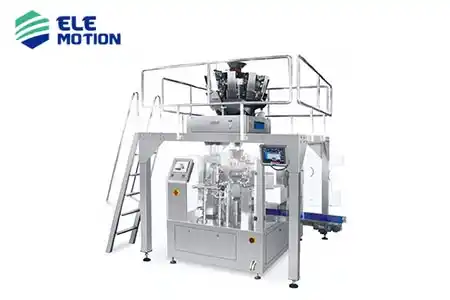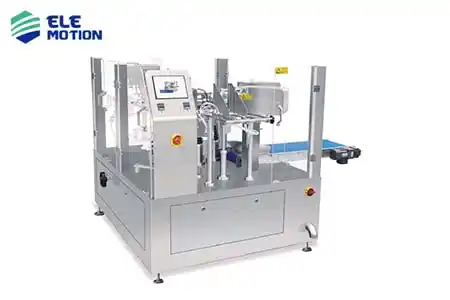


The packaging industry has passed a quiet tipping point. Walk into any modern production facility that processes snacks, powders, or granules, and you’ll see the same scene: a Vertical Packing Machine humming away, turning rollstock into finished pouches faster than three human shift crews could ever manage—and doing it without a single complaint about overtime. This isn’t a prediction. This is the reality of 2025‘s packaging floor. Yet for every manufacturer who has made the jump, there’s another still watching from the sidelines, convinced their manual lines “work just fine” until a competitor eats their lunch with margins they can’t touch.
Let’s kill the myth right now: you don’t need a €500,000 budget to automate your vertical bagging operations. Strategic investments in VFFS (Vertical Form Fill Seal) technology now deliver ROI timelines that would have been laughable just five years ago. The real question isn’t whether you can afford a Vertical Packaging Machine—it’s how long you can afford to operate without one.
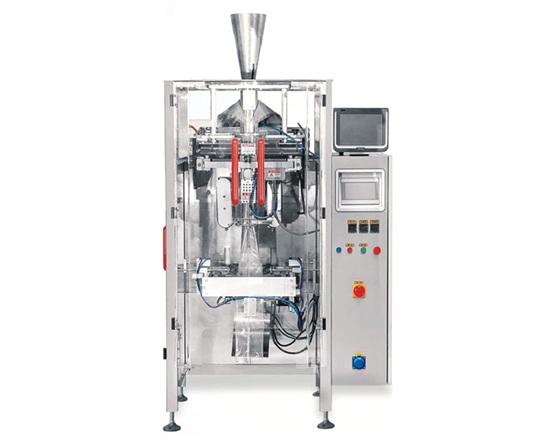
Before we dive into specs and certifications, let’s be honest about what’s really happening inside a VFFS system. Many packaging guides treat vertical automation as magic. It’s not. Here’s the unvarnished process: film unwinds from a roll, drapes down a forming tube to create a continuous tube, a vertical seal closes the back seam, product drops through the tube into the tube, horizontal jaws seal the bottom of each bag while cutting it free from the roll, and the cycle repeats. That’s it. No sleight of hand. Just physics executed with mechanical precision.
What actually separates good machines from great ones lives in the details you can’t see—servo-driven film tension systems that don’t stretch your material, multi-head weighing assemblies that measure to ±0.2% deviation, and seal bars that cycle 160 times per minute without a single weak seal. These aren’t optional features anymore. They‘re the difference between a machine that runs and a machine that runs profitably.
The industry‘s dirty secret is that off-the-shelf vertical automation, while convenient, almost never matches your actual production reality. You’re either over-paying for capabilities you don‘t need or under-delivering on the ones you do. This gap is where packaging managers lose sleep—and budgets.
Take granule snack packaging—potato chips, pretzels, roasted nuts, coffee beans. The obvious metric everyone chases is bags per minute. But here’s what your distributor won’t tell you: breakage kills your margins faster than a slow cycle ever will. When delicate products fall through a vertical fill tube, they collide with the forming shoulder, the tube walls, and the product already waiting below. Each impact crushes corners, shatters edges, and turns premium product into a less-premium pile of fragments.
Smart Vertical Packing Machine configurations address this through geometry. Extended forming tubes create gentler material transitions. Reduced drop heights mean less velocity at impact. Servo-actuated in-feed synchronization ensures that product lands on product, not on metal. When these features are absent, you’re not just producing bags—you’re producing crushed goods that shouldn’t pass QC.
Flour, protein powder, coffee grounds, detergent, chemical additives—these aren’t granules, and treating them like granules destroys your working environment. Powder behaves like a liquid when agitated, creating airborne dust that coats every surface within fifteen meters. This isn’t just about cleanup costs. It‘s about operator health, cross-contamination between product runs, and the fire hazard nobody wants to discuss during safety meetings.
Effective Vertical Packing Machine powder handling starts with dust-sealed filling heads. Screw augers with integrated agitation systems displace powder smoothly rather than dropping it through open space. Centralized dust extraction ports pull airborne particles away from the sealing zone before they can foul the jaws. If your vertical bagger lacks these features for powder applications, you’re not buying a packaging solution. You’re buying a problem.
Liquid pouches—sauces, oils, purees, personal care products—are the packaging industry’s leak anxiety trigger. A single compromised horizontal seal means product seeps through the film layers, contaminating downstream equipment, ruining case-packing materials, and turning a routine shift into an emergency cleanup operation. Traditional piston fillers often fail here because their dosing accuracy degrades as product temperature or viscosity fluctuates.
ELEMOTION has engineered a different approach for liquid and paste applications. Our vertical systems integrate volumetric filling heads with dedicated seal temperature profiling—no single PID setpoint for all conditions, but curve-based heating that compensates for cold product slugs and ambient temperature drift. Combined with multi-axis servo control, the result isn‘t just drier seals. It’s consistent seals across ten thousand cycles.
Here’s where most equipment buyers make their most expensive mistake. They assume that “custom” means expensive—a bespoke build with exotic materials and engineering hours that destroy the ROI calculation. That’s not custom. That‘s reinventing the wheel. True custom Vertical Packing Machine engineering means starting from a proven platform and modifying only the variables that matter to your specific product, your specific film, and your specific production targets.
Take hopper configurations. A standard VFFS machine assumes bulk product flows steadily from an overhead bin. But what if your product agglomerates? What if it bridges across the hopper throat because your humidity fluctuates between seasons? A fixed geometry can’t adapt. An engineered system—with custom hopper tapers, integrated vibratory assist, or agitated in-feed—solves problems at the material entry point rather than masking them with speed adjustments later. This isn‘t luxury engineering. It’s the difference between a machine that runs and a machine that runs without intervention.
ELEMOTION‘s service model reflects this pragmatic philosophy. We don‘t sell generic configurations and hope they fit. Our engineering team evaluates your material handling requirements, your available floor space, and your throughput targets before specifying a single component. The result is automation that fits your workflow rather than forcing your workflow to fit the machine. That means shorter commissioning timelines, lower operator retraining costs, and maintenance procedures that match your existing team’s capabilities.
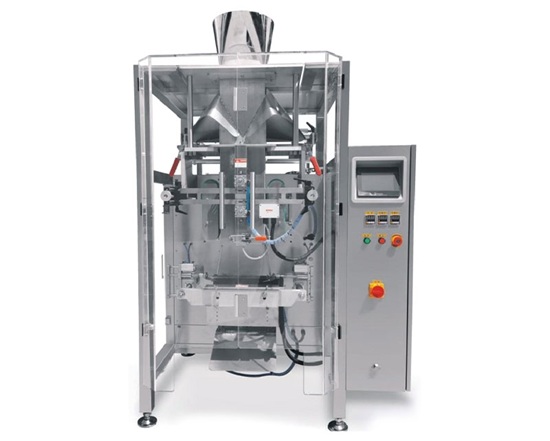
Let’s talk about price. Entry-level VFFS machines from Asian suppliers can be found for 8,000–8,000–45,000. That number catches everyone‘s attention. Here’s what the low-price vendors don‘t put in the brochure: replacement parts availability six weeks out, control panel interfaces in languages your maintenance team doesn’t read, and NO clear path for firmware updates when your production requirements change.
Compare that to a properly specified Vertical Packing Machine from a manufacturer with regional parts distribution, HMI localization options, and published MTBF (Mean Time Between Failures) data. The upfront delta might be 20–30 percent. The TCO (Total Cost of Ownership) difference over five years—including downtime, emergency freight for parts, and lost production during extended service calls—can flip entirely in the more expensive machine‘s favor. This is math that purchasing departments often skip because it’s harder to calculate than initial price. But it matters.
A CE marking on the side of your Vertical Packing Machine is not permission to stop asking questions. CE is a self-declaration of compliance with EU safety directives. Have you seen the technical file behind that declaration? Have you confirmed which notified body—if any—reviewed the design?
The meaningful standards for vertical automation buyers go deeper. EN 415-3 establishes safety requirements for VFFS machines across design, construction, installation, commissioning, operation, adjustment, maintenance, and cleaning . ISO 13849 governs safety-related parts of control systems. For food-contact applications, FDA 21 CFR Parts 174–178 regulate indirect food additives—including substances that could migrate from equipment surfaces into your product. A vendor who cannot document compliance with all of these likely hasn‘t done the rigorous engineering that food and pharmaceutical applications require.
ELEMOTION machines are engineered from the ground up for compliance across major markets. We’ve secured over 120 patents and intellectual property rights, with design principles that prioritize safety integration rather than safety retrofitting. We don’t slap a CE sticker on a machine after final assembly—we design with EN 415-3 and ISO 13849 embedded from the concept stage.
Horizontal Form Fill Seal (HFFS) systems have their place—large-format products, heavy items that can‘t free-fall, rigid containers. But let’s compare floor space. A typical VFFS installation occupies roughly 80% less area than an equivalent-capacity HFFS line. That‘s not a marginal gain. That’s the difference between fitting a second production shift into your existing facility and breaking ground on an expansion.
Where vertical automation truly wins is footprint per output. Vertical bagging leverages gravity as a material handling system—no transfer conveyors, no product orientation mechanisms, no accumulation tables. The product drops into the tube, the tube becomes the bag, and the bag drops onto the outfeed conveyor. Simplicity is reliability. And reliability is profitability.
The EU‘s Ecodesign for Sustainable Products Regulation (ESPR), effective July 2024, is rewriting the rules for anyone selling packaged goods into European markets. The regulation establishes durability, repairability, reusability, and resource efficiency requirements that directly impact packaging machinery design. If your vertical bagger can’t handle recyclable mono-materials, if it generates excessive edge trim waste, or if it lacks energy consumption monitoring for sustainability reporting, you‘re building compliance risk into your production line.
Film waste reduction has become the overlooked lever for sustainable vertical automation. Serrated sealing jaws that shave five millimeters per bag—on a VFFS line running 150 bags per minute—generate 2.26 million fewer bags worth of edge trim per month. That’s not just environmental goodwill. That‘s material cost reduction that flows directly to margin.
Buying a Vertical Packing Machine isn’t like buying a forklift. You can‘t plug it in and drive away. Scope of supply matters. Here’s what responsible OEMs include: FAT (Factory Acceptance Testing) with your product or a reasonable analog, installation supervision, operator training on your specific HMI configuration, documented preventive maintenance schedules, and published spare parts lead times.
Vendors who can’t commit to these deliverables are selling you a machine. Vendors who insist on them are selling you a solution. ELEMOTION falls firmly in the latter category. Our commissioning process doesn’t end when the machine produces its first bag—it ends when your team can produce bags at target speed without our engineer standing beside them.
Here‘s the uncomfortable question you should ask every Vertical Packing Machine vendor: “What assumption in your ROI model is most likely to be wrong?” Their answer reveals whether they understand your business or just their commission structure.
Reliable ROI calculations for vertical automation balance three factors: labor reduction (how many manual packing positions can this machine replace per shift), material savings (reduced film waste and fewer rejected packs), and throughput gain (additional saleable units per day). Manual packaging requires continuous labor expenditure—wages, benefits, training, overtime. Once a VFFS line is running, operational costs shift to power consumption and scheduled maintenance. The payback period formula is simple: total machine investment divided by net periodic benefits.
If your vendor can‘t walk you through this math with your specific production data, find another vendor.
Vertical automation has evolved from a cost center into a competitive weapon. Whether you’re running three shifts of snack foods, batch-packing powdered supplements, or scaling liquid sachet production, the right Vertical Packing Machine doesn‘t just package your product—it multiplies your margin per operating hour. The technology exists. The standards are clear. The ROI models work when you apply honest numbers.
The only question left is how patient your competitors are willing to be.

GET A QUOTE